
A pipe springs a leak. Your plumber quotes the fix, and you pay it. Six months later, a different pipe goes. Then another.
At some point, repairing stops being the cheap option and starts being the expensive one. The trick is knowing where that line sits for your house, before you’ve spent repipe money on repairs that never stuck.
What we’ll cover:
- When a targeted repair genuinely makes sense
- The signs that point to full replacement
- Cost and timeline for each path
- What epoxy pipe lining can and can’t do
- How to make the call with confidence
Repiping is all we do at OC Repipes, which means we also tell homeowners when they don’t need one. Let’s find your answer.
TL;DR: Repair or Replace
| Factor | Pipe Repair | Repiping |
|---|---|---|
| Best for | One isolated leak, impact damage | Multiple leaks, systemic failure |
| Pipe age | Young pipe material | Old pipes past their lifespan |
| Cost | A few hundred to low thousands | $1,500 to $15,000 |
| Timeline | A few hours | 2 to 5 days |
| Lifespan gained | Months to years | 30 to 50+ years |
| Disruption | Minimal, localized | Moderate, whole house |
| Risk after | Next leak still coming | Plumbing troubles end |
When Pipe Repair Is the Right Call
Not every leak means your entire plumbing system is failing. Plenty of situations call for a targeted repair, and spending on a full repipe would be overkill.
Stick with plumbing repair when:
- You have one isolated leak and no history of pipe problems elsewhere
- The damage was accidental, like a nail through a line during a renovation
- Your pipe material is young, with decades of service life left
- Budget constraints make a temporary fix the realistic choice right now
- The rest of your system passes a plumbing inspection cleanly
Age of the existing pipes is the clearest tiebreaker. Copper piping installed fifteen years ago that took physical damage deserves a repair. Galvanized pipes from 1962 leaking for the third time do not.
Worth knowing: Fixing leaks promptly can trim roughly 10% off your water bill. Even when a repair is the right short-term move, don’t let it sit.
When Repiping Is the Smarter Move
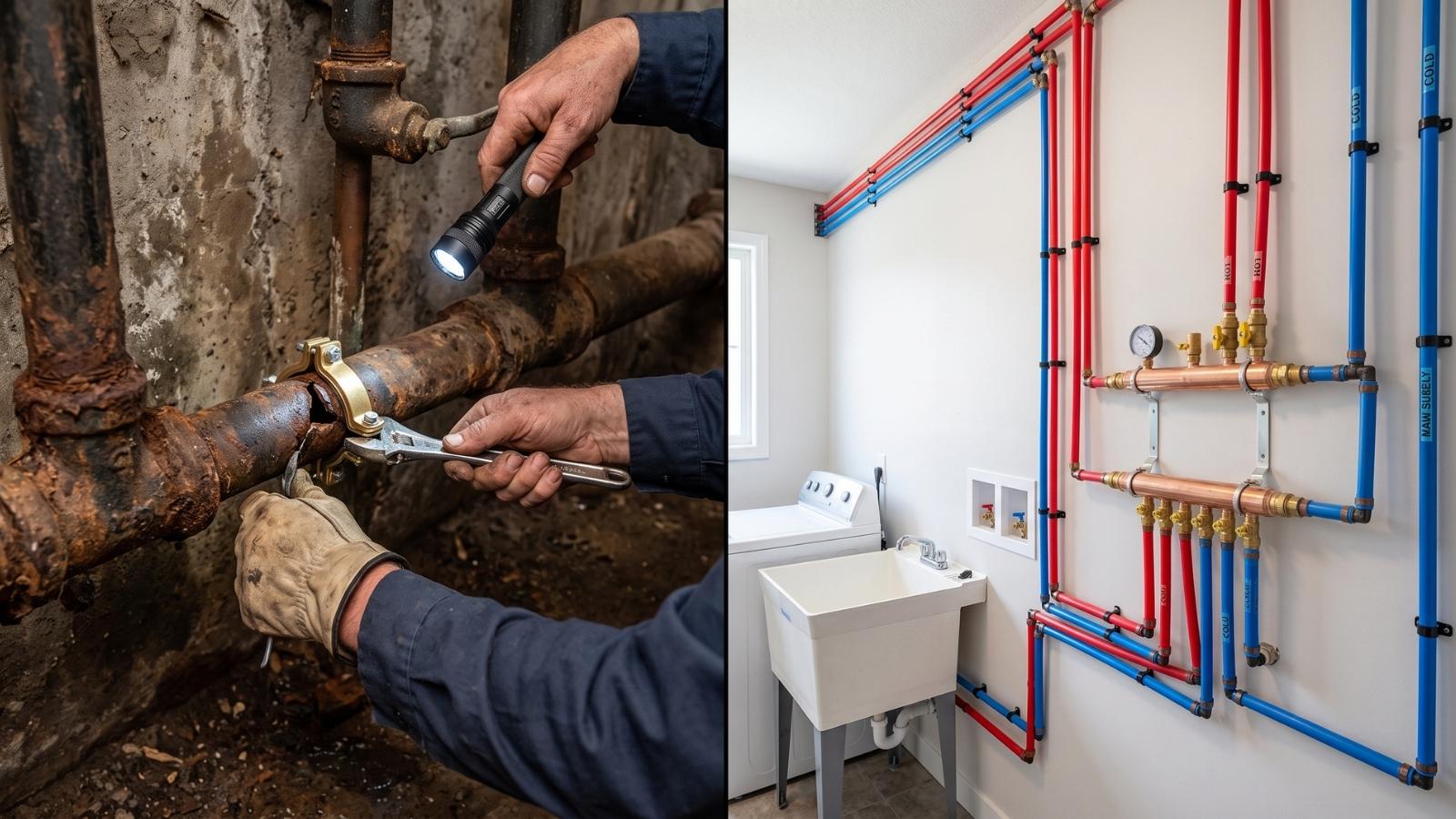
Repiping replaces all the failing pipes in your home rather than chasing them one at a time. It’s the answer when the pipes themselves, not one unlucky spot, are the problem.
The signs that point to full replacement:
- Frequent pipe leaks in different parts of the house
- Rusty or discolored water from multiple taps, signaling corroded pipes
- Low water pressure throughout the home, not at a single fixture
- Visible corrosion on exposed pipes in the garage or crawl space
- Slab leaks, especially more than one
- Home age over 50 years with original galvanized steel or cast iron
Frequent leaks across multiple areas mean systemic failure. Each repair buys weeks while the next failure builds somewhere you can’t see.
Old galvanized pipes deserve special attention. They corrode from the inside out and can leach contaminants into your water supply, which makes them a water quality issue on top of a leak issue. Lead service lines are stricter still: they require full replacement, since partial repairs can make contamination worse.
The honest math: Repiping is often more cost effective than repeated repairs. Three $1,200 emergency calls in two years is $3,600 spent on a system that still fails. That money could have covered a meaningful chunk of a permanent fix.
What About Epoxy Pipe Lining?
Epoxy lining sits between the two options, and it gets pitched a lot. Worth understanding honestly.
The process coats the inside of your existing pipes with resin to seal small leaks without opening walls. Minimal property disruption, lower upfront cost, faster install.
Where epoxy pipe lining works:
- Structurally sound pipes with localized corrosion
- Drain and sewer applications more than water supply lines
- Restricted access situations, like high-rises or historic buildings
- Short-term stabilization when repiping isn’t possible yet
Where it falls short:
- It coats over the problem instead of removing failing material, so the original pipe keeps aging underneath
- Warranties run shorter, often around 10 years versus 25 to 30 for new pipes
- Collapsed or severely damaged pipes can’t be lined at all
- Not all insurers accept it as a permanent repair
The risk homeowners run into: paying twice. Some who choose lining on badly deteriorated supply lines end up funding a whole house repipe a few years later anyway.
For residential water supply lines with real corrosion history, new pipe installation remains the more reliable long-term answer.
Cost and Timeline Compared
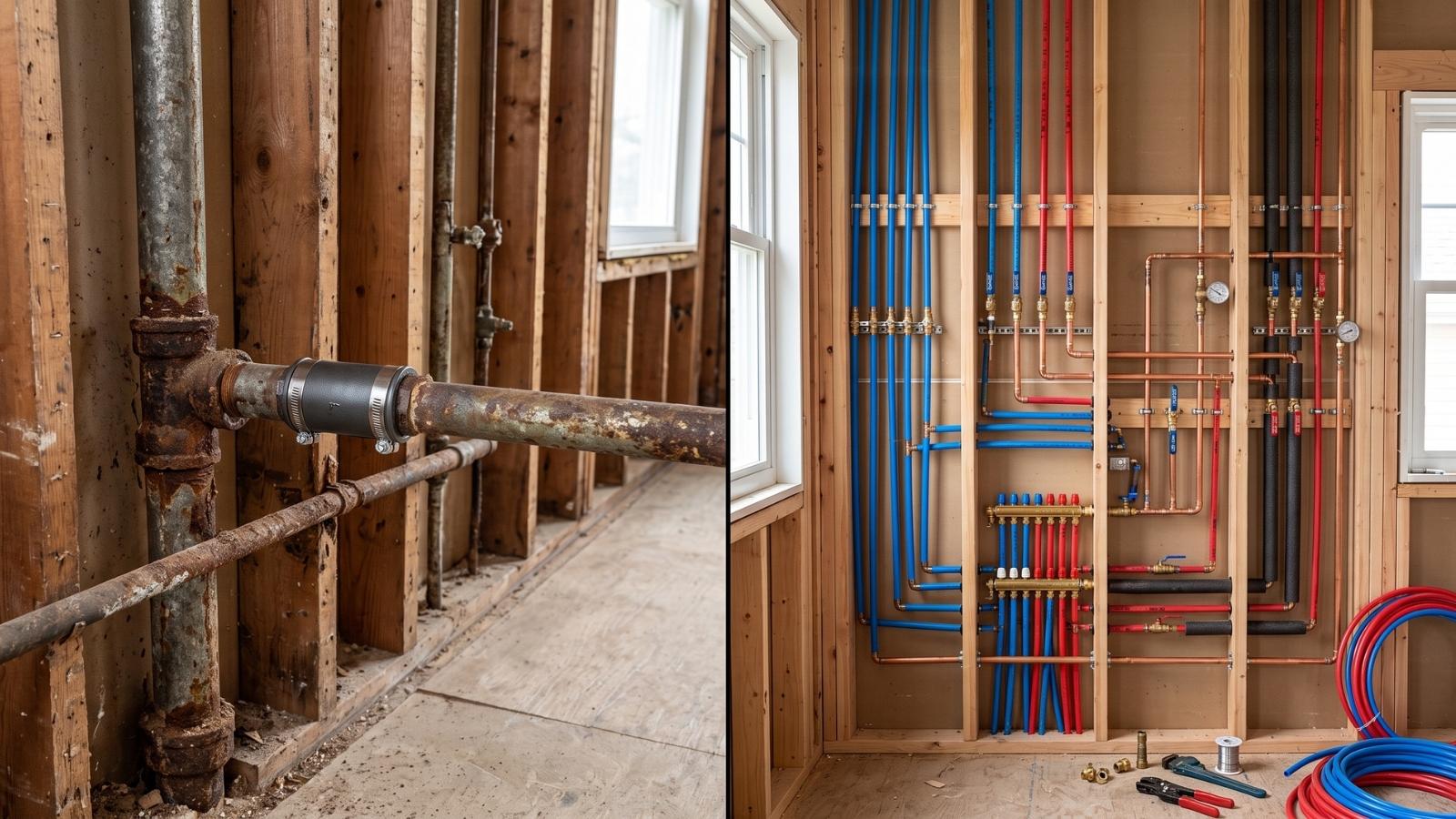
Here’s what each path actually asks of you in money and time.
Pipe repair: Most repairs wrap in a few hours. Cost depends on access, and a leak inside a wall or under a concrete foundation costs far more than one at an exposed joint.
Repiping: Repiping costs range from $1,500 to $15,000, driven by home size, fixture count, pipe accessibility, and pipe material. Most projects take 2 to 5 days, and experienced plumbers keep water service running each evening.
What you get for the higher number:
- 30 to 50 years of reliable plumbing with minimal maintenance, and modern materials can push toward 50 to 100 with proper installation
- Consistent water pressure restored throughout the house
- Cleaner water with no corrosion leaching into your supply
- Fewer emergencies and an end to ongoing repairs
- Better appliance performance from your water heater and fixtures
Material options matter here. PEX is flexible and cost-effective, copper pipes can last over 70 years with proper installation, and CPVC is affordable and handles hot water well. Our PEX vs. copper comparison covers which suits Southern California water.
The Resale Angle Nobody Mentions
If you’re planning to sell in the next few years, this changes the calculation.
Outdated plumbing systems lower buyer appeal fast. A disclosed history of leaks or visible galvanized steel gives buyers leverage to negotiate down, or walk.
Updated plumbing does the opposite:
- Attracts higher offers from buyers who see one less project
- Speeds up the sale by clearing an inspection red flag
- Supports a higher selling price as a documented capital improvement
Repiping is also the obvious move during extensive renovations. If walls are already open, you’re paying for access you’d otherwise pay for twice.
How to Make the Call
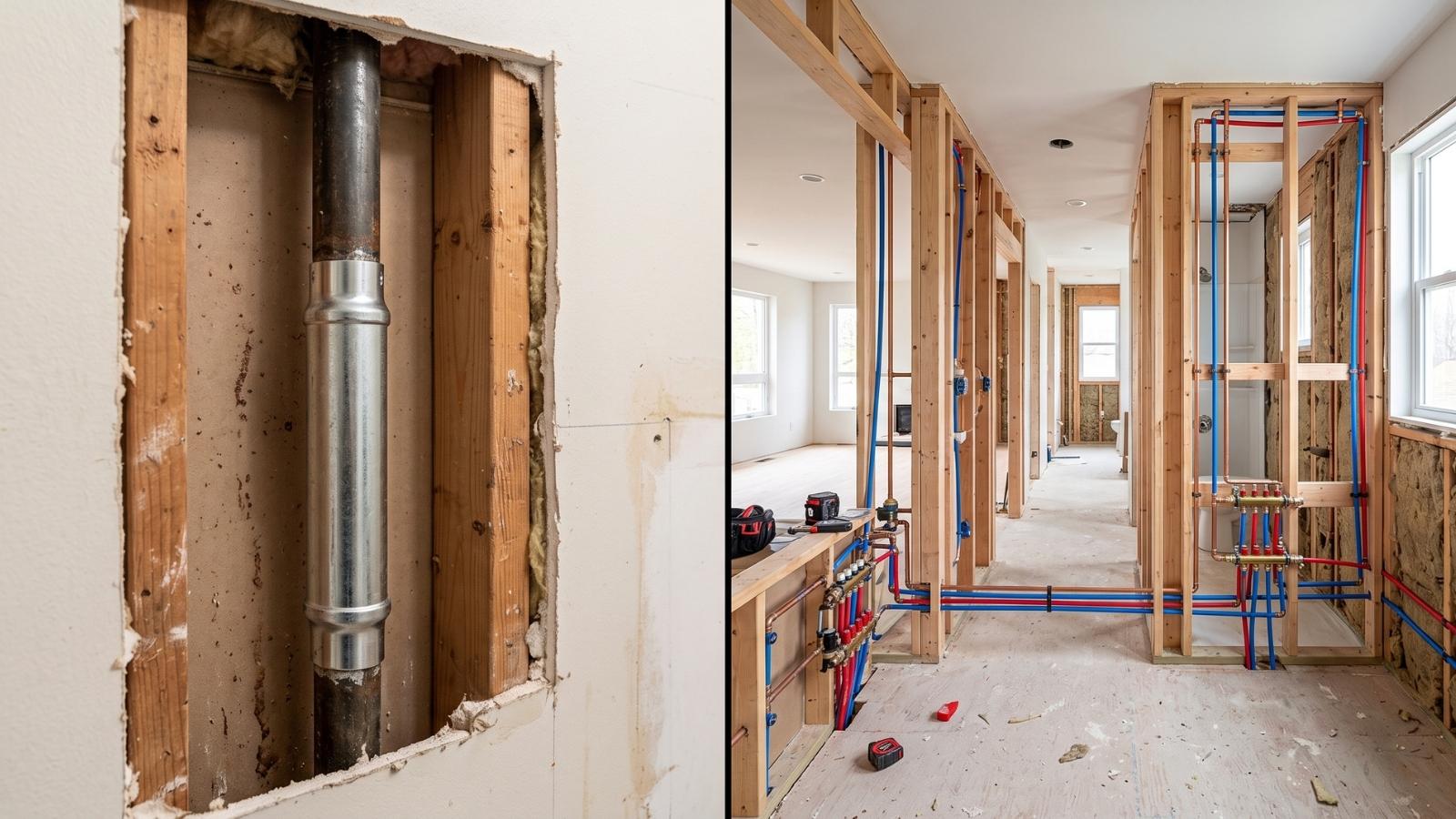
Don’t guess. A proper plumbing inspection from a licensed plumber settles it with evidence.
What a good assessment looks at:
- Pipe material and age across the whole house
- Leak history, not just today’s leak
- Water pressure readings at multiple fixtures
- Visible condition of accessible pipe walls and joints
- Water quality signs like rust colored water
Then ask the question that cuts through everything: is this one bad spot, or is the whole system telling me something? Professional plumbers who handle both answers will tell you straight.
That’s how we approach it at OC Repipes. We inspect, we explain what we find, and if a targeted repair is genuinely your best move, we say so. When replacement is the right call, we handle permits, local building codes, durable materials, and drywall restoration with minimal disruption and a Lifetime Warranty on workmanship.
Repair or Repipe, Decide Confidently With OC Repipes
The choice isn’t about which sounds cheaper today. It’s about which one actually ends the problem.
Quick recap:
- Repair an isolated leak on young, healthy pipes
- Repipe when leaks repeat, water discolors, or pressure drops housewide
- Epoxy lining suits sound pipes with limited damage, not failing supply lines
- Costs: repairs run hours, repiping runs $1,500 to $15,000 over 2 to 5 days
- Payoff: 30 to 50+ years of reliable plumbing and stronger resale value
Since repiping is the only thing we do, OC Repipes gives you an honest assessment before anyone touches a wall. Free estimate, flat-rate pricing, permits and drywall included, and a Lifetime Warranty behind every job.
Frequently Asked Questions
How much does it cost to repipe a 2000 sq ft house?
Expect roughly $6,000 to $12,000 for a 2,000 sq ft home, depending on fixture count, pipe accessibility, and whether you choose PEX or copper piping.
When should a house be replumbed?
Replumb when leaks recur across multiple areas, water runs rusty, pressure drops housewide, or your home is over 50 years old with original galvanized steel pipes.
Should I repipe instead of repairing a slab leak?
Often yes, especially for a second slab leak or aging copper. Repairing one spot in a corroding system usually just relocates the next failure.
Will insurance pay to repipe a house?
Usually no. Standard policies cover sudden damage like a burst pipe but treat gradual corrosion and aging pipes as maintenance, leaving the repipe to you.
How long do pipe repairs last?
A repair on sound pipe material can last years. On corroded or aging pipes, it typically buys months before the next leak appears elsewhere.
Is epoxy pipe lining a permanent fix?
Not usually for water supply lines. Warranties run about 10 years versus 25 to 30 for new pipe, and the original pipe keeps deteriorating beneath the coating.
