
Your community has a problem you already know about. Slab leak in Building C last spring. Pinhole leaks in two units this summer. Another emergency plumbing invoice landing on the board’s desk every few months.
However, paying for leaks one at a time costs far more than fixing the whole plumbing system at once. Bulk repiping flips that math, and communities that plan it right save 15 to 25%.
What we’ll cover:
- Why break-fix repairs drain your budget
- How economies of scale cut per-unit costs
- Smart scheduling that keeps residents happy
- Choosing contractors built for large projects
- Budgeting, reserves, and financing options
We handle multi-family and HOA repiping across Orange County at OC Repipes, so this guide comes from projects we’ve actually run.
TL;DR: The Bulk Repipe Math
| Factor | Break-Fix Repairs | Bulk Repipe |
|---|---|---|
| Per-unit cost | Unpredictable, compounding | $3,000 to $10,000 fixed |
| Savings vs. individual jobs | None | 15 to 25% |
| Budget planning | Reactive emergencies | Predictable, reserve-funded |
| Water damage risk | Rises every year | Eliminated for decades |
| Resident disruption | Repeated, scattered | 2 to 4 hours per unit, once |
| Lifespan gained | Months | 40 to 70 years |
Why Break-Fix Repairs Cost More
Every board has seen this pattern. Aging pipes throw a leak, the association pays a contractor, and six weeks later a different unit floods.
That unit-by-unit strategy feels cheaper because each invoice is small. But the costs compound. One well-documented Southern California community burned through hundreds of thousands on leak repairs and piecemeal pipe replacement before realizing the approach was heading toward bankruptcy.
Warning signs your community has crossed from repairs into replacement territory:
- Repeated leaks across multiple buildings, not one problem unit
- Slab leak claims hitting your insurance more than once
- Low water pressure reported in common areas and individual units
- Water hammer noise in the walls when fixtures shut off
- Rusty or discolored water complaints from residents
Each of these points to failing original copper pipes or galvanized lines, a common cause of the leak cycle in older Orange County communities. Advance planning prevents the expensive emergency repairs that follow.
The board’s real question: Not “can we afford a repipe?” but “how much longer can we afford not to?” Water damage from a single burst pipe can exceed the per-unit cost of the repipe itself.
How Bulk Repiping Cuts Costs
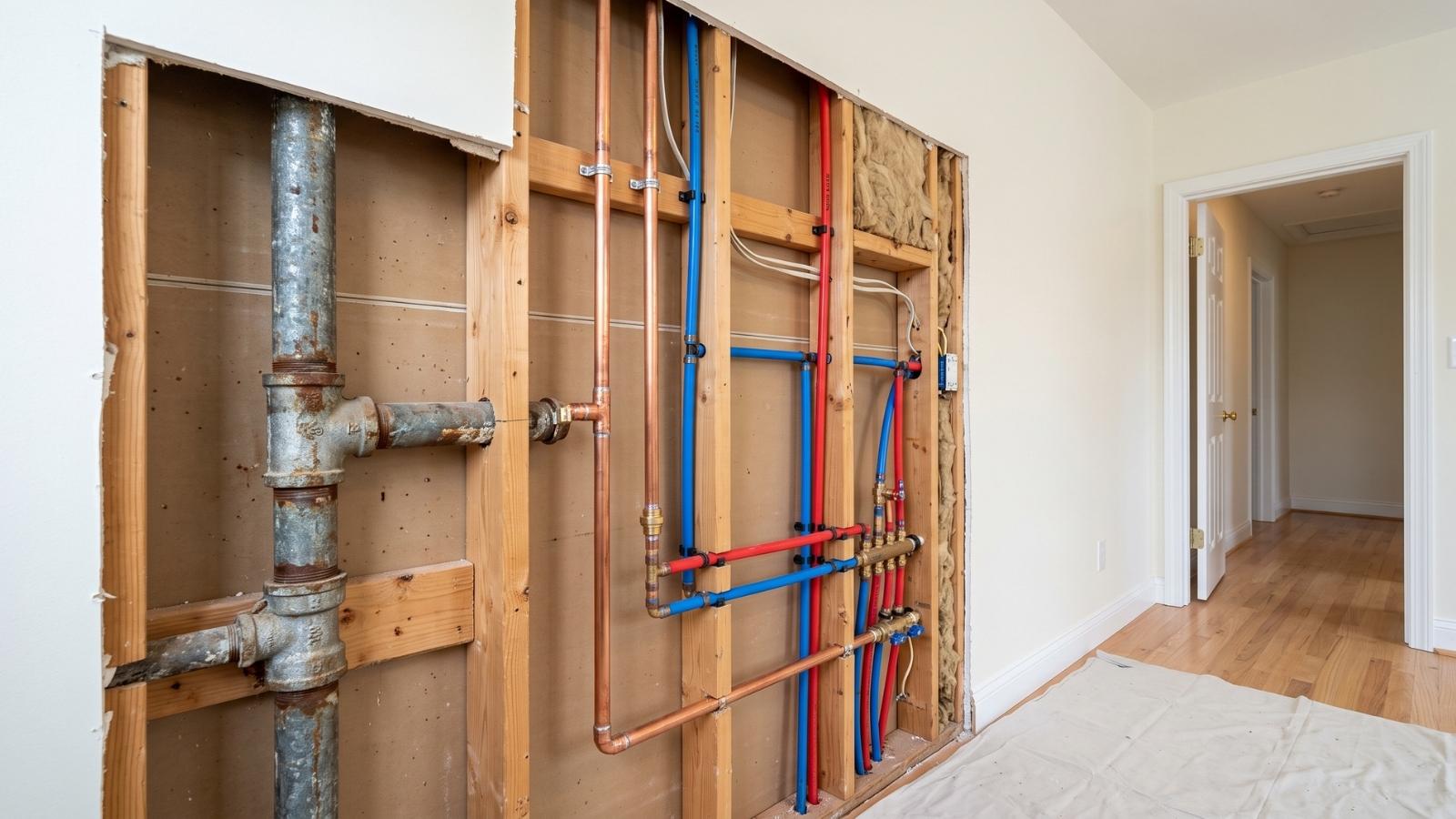
This is where economies of scale do the heavy lifting. Contracting an entire community at once lowers per-unit labor and material costs in ways individual homeowners never access.
Where the savings come from:
- Bulk material pricing: Quality materials bought at volume cost less per unit
- Labor efficiency: Crews stay on one site instead of mobilizing repeatedly
- Standardized floor plans: Repeating the same layout speeds every unit after the first
- Competitive bidding: A well-scoped project attracts better pricing from repipe specialists
- Bundled restoration: Negotiating drywall access points and patching into the contract beats paying separately
Per-unit costs for HOA repiping generally run $3,000 to $10,000, depending on unit size, access, and building type. Compare that to the open-ended cost of chasing recurring leaks indefinitely.
Most modern bulk repipes favor PEX piping over copper. It installs faster, costs less, and resists the corrosion that killed the original system. For communities that prefer metal, copper remains available, and our PEX vs. copper guide breaks down the trade-offs.
Scheduling That Minimizes Disruption
Boards worry about this more than cost, and fairly so. Residents tolerate a lot less than budgets do.
The good news: phased scheduling solves it. Crews work building by building, unit by unit, so plumbing work stays contained and predictable.
What residents actually experience:
- 2 to 4 hours of water outage per unit on their scheduled day
- Water service restored every evening without fail
- 2 to 4 days of work in a typical single-family home repipe
- 2 to 4 weeks total for a 10 to 30 unit condo building
Clear communication makes or breaks the experience. Coordinated access and timely resident notifications prevent the delays that blow up timelines, which is why a dedicated project manager matters on any HOA repiping project.
Pro tip for boards: Assign resident communication early. Notices should land at least two weeks ahead with exact dates, outage windows, and access requirements. Confused residents who aren’t home cause more schedule slippage than any plumbing issue.
Phased work also keeps labor costs down. Efficient unit-by-unit installation means less idle crew time, and those significant savings land back in your budget.
Choosing the Right Contractor
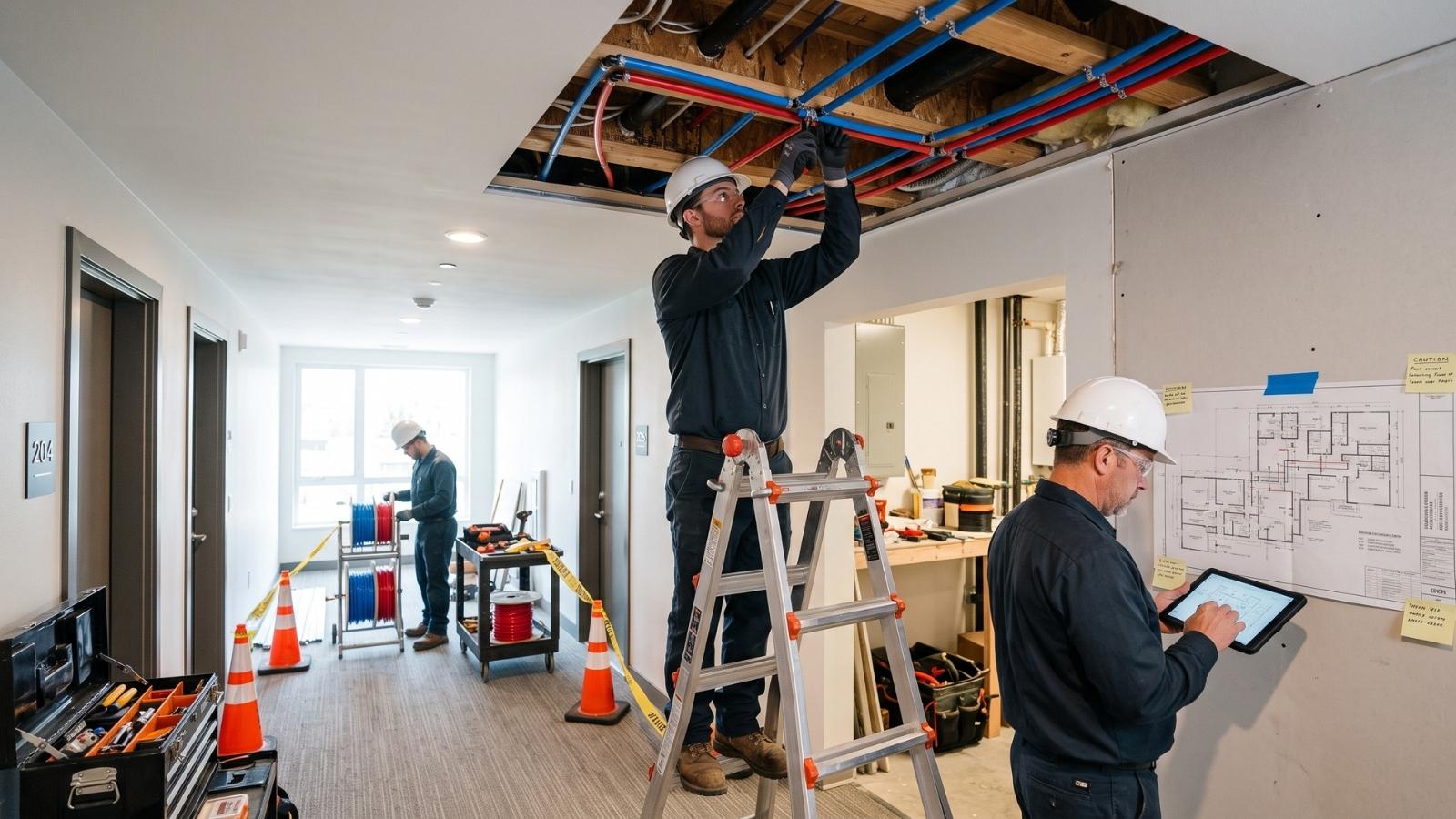
Not all contractors are equipped for large-scale HOA work. A crew that handles a whole house repipe well may stall out coordinating 40 units and a city inspection schedule.
What your board should require in every proposal:
- Multi-family experience specifically, not just single-family home repipe work
- A dedicated project manager as your single point of contact
- Detailed timelines and pricing, unit by unit and phase by phase
- Required permits and final inspections handled by the contractor
- Restoration included: drywall access points patched, site left clean
- Real reviews from other Orange County communities
- Proof of licensing and insurance appropriate to the project size
Specialized repipe specialists typically quote lower and finish faster than generalists, simply because volume work is their daily job. Professional proposals also help boards make informed decisions and defend them at board meetings.
One legal note worth raising with your management company: under California law, HOAs are generally responsible for maintaining and replacing common areas, which usually includes main water lines. Confirm the split between association and owner responsibility in your CC&Rs before scoping the project.
We run multi-family repiping across South Orange County, from condos in Lake Forest to communities in San Clemente and Dana Point. Board meetings, property managers, phased access, city inspection coordination: it’s the work we do every week.
Budgeting, Reserves, and Financing
The smartest boards plan this before the pipes force the issue. Proactive reserve planning turns a crisis into a line item.
How to get ahead of it:
- Commission a reserve study that accounts for plumbing system replacement
- Fund it gradually instead of hitting owners with a special assessment
- Get multiple competitive bids on a clearly written scope
- Ask about financing options to spread cost across budget cycles
Bulk repiping gives your community predictable budgeting. You trade an unpredictable stream of emergency invoices for one known number, plus decades of long-term performance from a modern plumbing system.
The real value beyond the savings: better water quality and flow throughout every unit, no recurring leaks in main water lines, and a community that stops bleeding money on plumbing surprises. Ask for a free estimate to put an actual figure in front of your board.
Final Thoughts: Plan Your Bulk Repipe With OC Repipes
Bulk repiping isn’t just a plumbing decision. It’s a budgeting decision, and the communities that treat it that way save the most.
Quick recap for your board:
- Break-fix costs more than replacement over time
- Bulk pricing saves 15 to 25% versus individual unit work
- Per-unit cost typically runs $3,000 to $10,000
- Phased scheduling limits residents to 2 to 4 hours of outage
- Specialized contractors finish faster and quote lower
- Reserve planning beats emergency special assessments
Since repiping is the only thing we do, OC Repipes brings boards and property managers a clean, coordinated project from proposal through final inspection. Permits, phased scheduling, drywall restoration, and a Lifetime Warranty on workmanship, all in one flat-rate proposal.
Frequently Asked Questions
How much does HOA bulk repiping cost per unit?
Per-unit costs typically run $3,000 to $10,000, depending on unit size, building access, and pipe material. Bulk contracts save 15 to 25% versus repiping units individually.
How long does a condo building repipe take?
A 10 to 30 unit condo building usually takes 2 to 4 weeks. Individual units are completed on a phased schedule, so work stays contained and predictable.
Will residents lose water during the repipe?
Only briefly. Each unit typically sees a 2 to 4 hour water outage on its scheduled day, and water service is restored every evening before crews leave.
Is the HOA or the homeowner responsible for repiping?
California law generally requires HOAs to maintain and replace common areas, which often includes main water lines. Check your CC&Rs, since responsibility for in-unit piping varies.
Should our HOA choose PEX or copper?
Most modern bulk repipes use PEX for its lower cost and faster installation. Copper remains an option where longevity or high heat tolerance is the board’s priority.
How should our board budget for a bulk repipe?
Fund it through reserve planning rather than a special assessment. Commission a reserve study, gather competitive bids on a clear scope, and ask contractors about financing options.
