
Most of the time, no. And that gap is the single most expensive surprise homeowners run into after a whole house repipe.
Your plumbers finish, the pressure test passes, the city inspector signs off, and you’re left staring at a dozen open holes in your interior walls with no plan and no budget for closing them. Here’s how to avoid that.
What we’ll cover:
- Why most plumbers exclude drywall work
- Basic patching vs. full restoration
- What wall repair actually costs
- The exact questions to ask before signing
- How to compare quotes honestly
We fold drywall repair into every job at OC Repipes, so we know exactly where quotes hide this.
TL;DR: The Short Answer
| Question | Reality |
|---|---|
| Included by default? | Usually not |
| What plumbers often do | Basic patching over access points |
| What’s typically excluded | Taping, mudding, texture matching, painting |
| Restoration cost | $500 to $2,500+ |
| Who does the finish work | A separate drywall contractor |
| Exception | Dedicated repipe specialists who bundle it |
Why Most Plumbers Leave the Holes
It isn’t laziness. It’s specialization.
Plumbing contractors focus strictly on pipe replacement. Their crews are trained on pipe routing, expansion fittings, pressure testing, and code compliance, not texture matching and finish painting. Those are different trades with different tools and different skills.
So the standard arrangement looks like this: plumbers cut small access points in walls and finished ceilings to reach the old pipes, complete the plumbing work, and leave wall restoration to someone else. Expect drywall restoration to appear as a separate line item, or not appear at all.
Only a small number of plumbing contractors include finish drywall work in their base price. Dedicated repipe companies that run their own drywall crews are the usual exception.
The trap: A repipe quote that looks $2,000 cheaper often just moved $2,000 of work off the page. You still pay it, just to a second contractor, on your own time.
Basic Patching Is Not Restoration
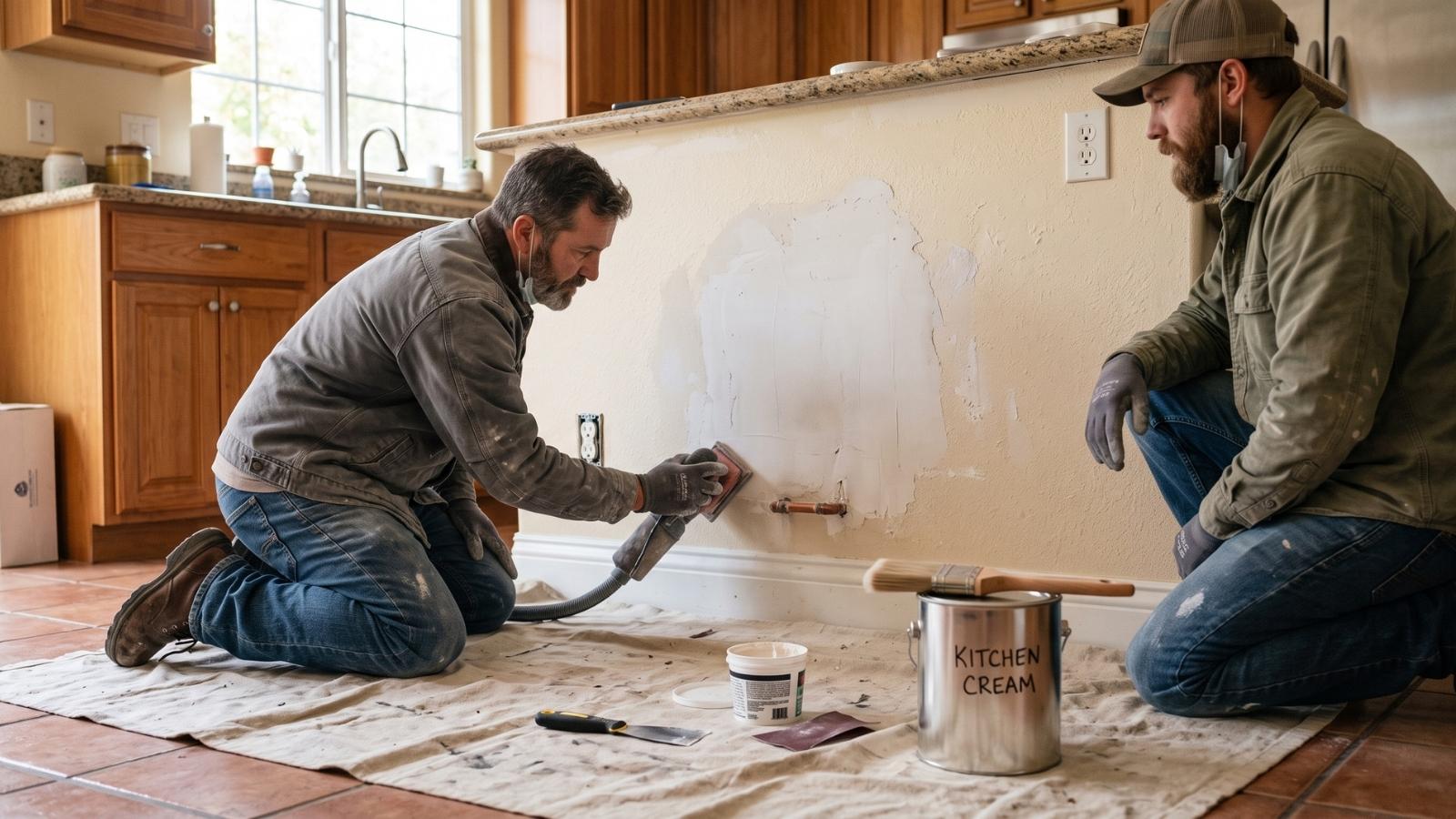
Some plumbers do include “basic patching,” and homeowners assume that means finished walls. It doesn’t.
Basic patching means functional coverage over the access points. The hole is closed. It is not blended, textured, or painted, and it will look exactly like a patch.
Full restoration means the opening is properly rebuilt:
- Backing installed inside the wall so the patch has something solid to attach to
- A fitted patch cut to size and screwed to the backing, not the old cutout pressed back in
- Tape and multiple coats of compound, each feathered wider than the last
- Texture matching to blend with surrounding walls
- Primer and paint so the repair disappears
Proper repairs need two to three coats of compound with sanding between each. One coat and done means a visible patch forever.
When a quote says “patching included,” ask which of those two things it means. The difference is hundreds to thousands of dollars.
What Drywall Repair Actually Costs
Ranges vary by how many drywall openings your home needs and how complex the finish is.
| Scope | Typical Cost |
|---|---|
| Light patching, few openings | $300 to $900 |
| Typical whole home repipe | $500 to $2,500 |
| Larger homes, textured walls | $1,000 to $3,000+ |
| Tile cut for access | Adds $1,000 to $3,000 |
Against a whole house repipe cost of $4,000 to $15,000, drywall work can represent 10 to 20% of your real total. That’s not a rounding error.
What drives your number:
- Access complexity: Slab homes need overhead routing and more cuts
- Fixture count: Several bathrooms means more openings
- Pipe material: PEX piping needs fewer access points than rigid copper, since it bends around corners with fewer fittings
- Square footage and how many finished ceilings are involved
- Texture type: Matching heavy texture costs more than flat walls
Material choice genuinely matters here. Cross linked polyethylene flexes through the home’s plumbing with fewer openings than copper lines, which quietly lowers your drywall bill. Our PEX vs. copper guide covers the full trade-off.
Questions to Ask Before You Sign
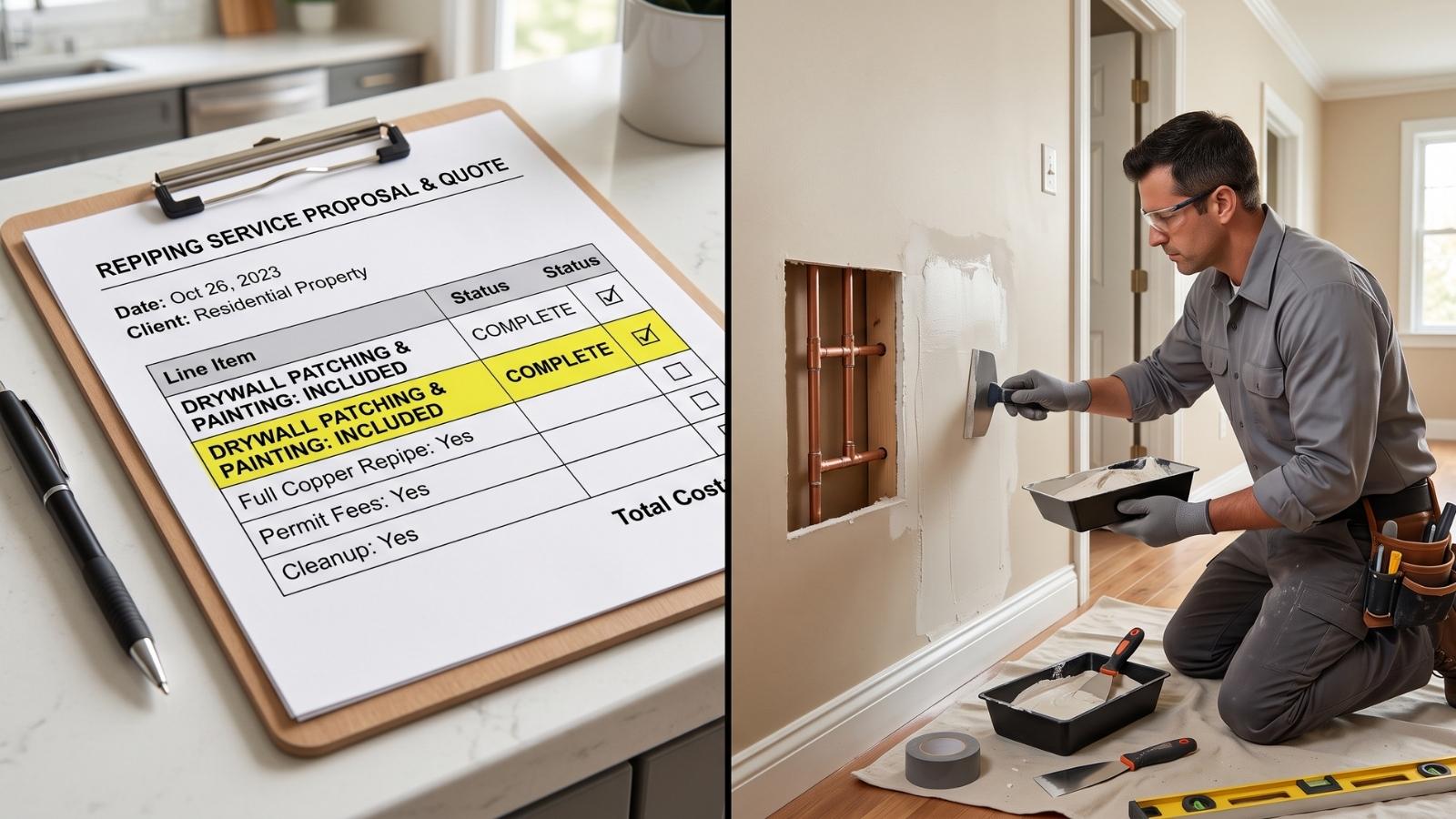
Get these answered in writing on every repipe estimate, before work begins.
- Is drywall patching and painting included, or separate?
- If included, is it basic patching or finished restoration?
- Does “finished” mean texture matched and painted?
- Who does the work, your crew or a subcontractor?
- Are permit fees included? (These run $50 to $800.)
- What pipe material and grade? (PEX-A versus PEX-B matters.)
- Is the water heater reconnection or replacement in scope?
- Is cleanup and debris removal included?
Pro tip: Ask for the drywall scope as a dollar figure, not a phrase. “Restoration included” in a proposal means whatever the contractor later says it means. A line item with a number attached is enforceable.
How to Compare Quotes Fairly
The lowest repipe quote is frequently the most expensive total. Compare what’s in scope, not what’s on the bottom line.
Run the math this way:
- Quote A: $9,000 all-inclusive with permits, patching, texture, paint, and cleanup
- Quote B: $7,000 plumbing only, plus $2,000 drywall contractor, plus $400 permit
Quote B costs more, takes longer, and leaves you coordinating two trades and chasing whoever’s responsible when the patch cracks six months later. Most homeowners prefer one accountable party.
That’s why we quote flat-rate and all-inclusive. A repipe from OC Repipes includes permits, the city inspection, drywall repair, repainting, and full cleanup in one number. No second contractor, no surprise invoice after the plumbers pull out.
Repipe Signs Worth Watching
Quick sidebar, since many people land here while deciding whether to repipe at all. These are the warning signs of failing pipes worth acting on:
- Recurring pinhole leaks: Two or three in 18 months points to systemic failure, not bad luck
- Discolored water: Signals corrosion inside corroded pipes
- Low pressure when multiple fixtures run: Indicates restricted water flow
- Green staining around copper fittings: Active corrosion in your copper lines
- Galvanized steel pipes in a pre-1970 home
A single slab leak might be a repair. A pattern across your water supply lines points to a planned repipe, and planning it beats reacting to a burst supply line at midnight.
Get Walls Restored, Not Just Repiped, With OC Repipes
A repipe isn’t finished when the pressure test passes. It’s finished when your walls look like nothing happened.
Quick recap:
- Usually excluded: Most plumbing quotes leave drywall work out
- Basic patching ≠ restoration: Ask which one you’re getting
- Budget $500 to $2,500+ for wall repair if it isn’t bundled
- PEX needs fewer openings than rigid copper, lowering the bill
- Ask in writing whether patching, texture, and paint are in scope
- Compare total cost, not the plumbing line alone
Since repiping is the only thing we do, OC Repipes includes drywall patching, repainting, permits, and cleanup in one flat rate, backed by a Lifetime Warranty on workmanship. Get a free estimate and see every line item spelled out.
Frequently Asked Questions
How much does it cost to repipe a 1,200 square foot house?
Expect roughly $4,000 to $8,000 for a 1,200 sq ft home with PEX, more for copper. Fixture count, foundation type, and drywall scope shift the total.
How much does a contractor charge to patch drywall?
Drywall repair typically runs $300 to $900 for light work, or $500 to $2,500+ after a whole home repipe. Texture matching and painting add to that.
Should I repipe instead of repairing a slab leak?
Often yes, especially for a second slab leak or aging copper pipes. Repairing one spot in a corroding system usually just relocates the next failure.
Will insurance pay to repipe a house?
Usually no. Policies cover sudden damage like a burst pipe but treat corrosion and aging pipes as maintenance, leaving repipe costs to the homeowner.
Do plumbers repair the holes they cut?
Some offer basic patching, which is functional rather than cosmetic. Finish work like taping, texture matching, and painting is usually a separate contractor.
Can I do the drywall repair myself?
Yes, if you’re comfortable with backing, taping, and texture matching. Poor patches show permanently, so most homeowners hire out anything beyond a flat wall.
