
Your copper pipes are springing pinhole leaks, and someone mentioned PEX might be the fix. Smart instinct. But before you commit, you want the real number, not a vague “it depends.”
Fair enough. Let’s put the figures on the table. The short answer: replacing copper pipes with PEX piping usually runs $4,000 to $15,000, and most homeowners land somewhere in the middle.
Here’s what we’ll break down:
- The upfront cost and what you’ll actually pay
- Material vs. labor costs, line by line
- The hidden extras most quotes leave out
- How much you save switching from copper
- Whether the swap is worth it for your home
We repipe homes across Orange County at OC Repipes, so these numbers come from the field, not a calculator guess.
The Short Answer on Cost
Replacing copper plumbing with a PEX plumbing system typically costs $4,000 to $15,000, with the average repipe landing around $3,500 to $11,000 depending on your home.
For a rough idea by home size, here’s how PEX installation tends to shake out:
| Home Size | Typical PEX Repipe Cost |
|---|---|
| Small (1 to 2 bath) | $4,000 to $6,000 |
| Average (1,500 sq ft) | Around $5,500 |
| Larger (2,200 sq ft) | Around $7,523 |
| Large/multi-story | $8,000 to $15,000+ |
Why the wide spread? Because your total cost varies based on home size, the number of bathrooms, and how easy your pipes are to reach. A single-story home with an unfinished basement is a breeze. A two-story with finished walls everywhere is a bigger job.
Material Costs: PEX vs. Copper
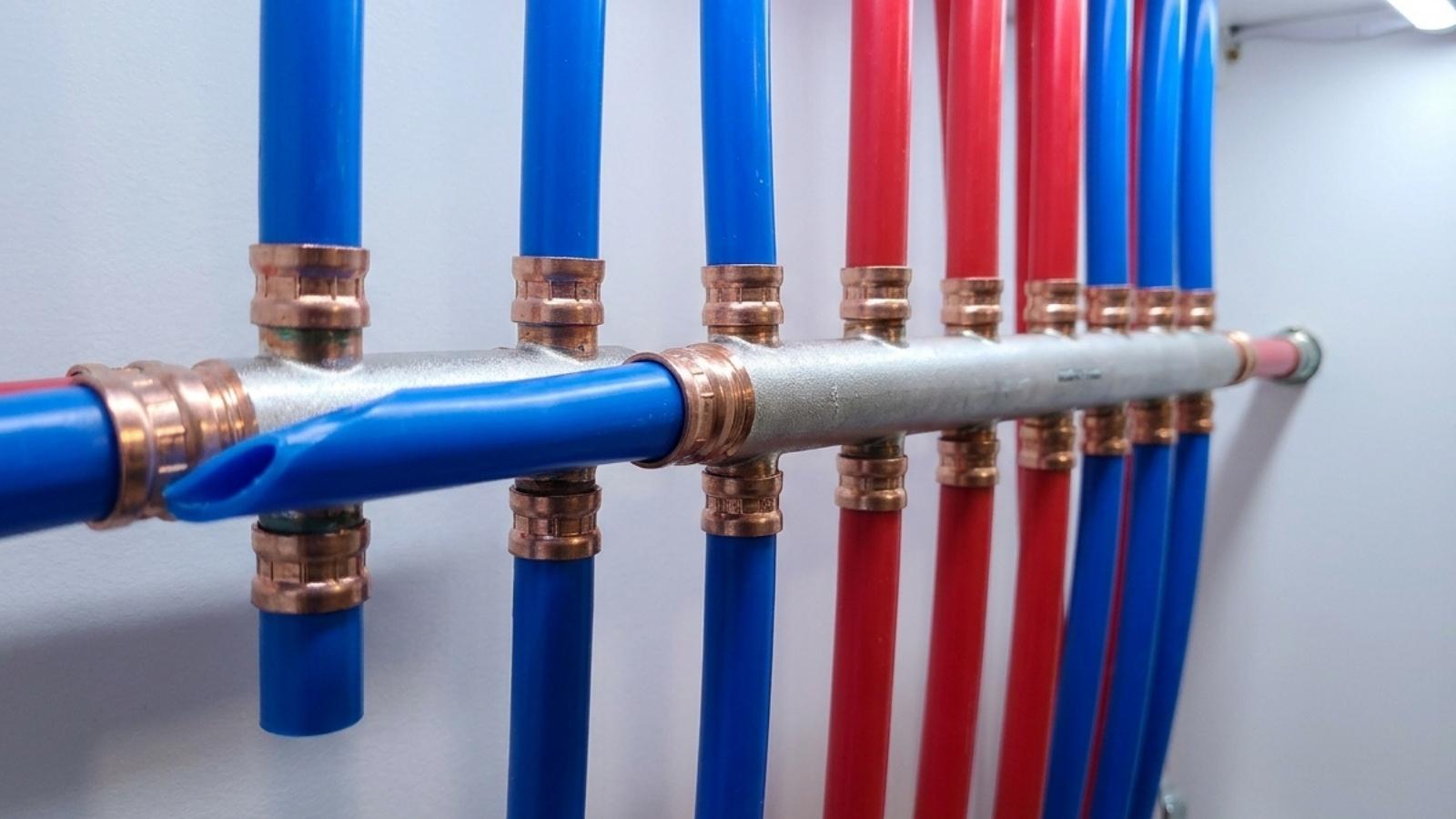
The piping material itself is dramatically cheaper than copper, and that gap starts on day one.
| Material | Cost Per Linear Foot |
|---|---|
| PEX materials | $0.50 to $2 |
| Copper | $2 to $4 |
That’s a real difference before labor even enters the picture. And PEX fittings are cheaper too. Because cross-linked polyethylene bends around corners, it needs fewer connections than rigid copper, which cuts down on both PEX fittings and the leak points that come with them.
A quick note on the PEX family: PEX-A is the premium tier, the most flexible and freeze-tolerant of the bunch. It’s what we install, and it handles freezing conditions by expanding up to eight times its size before it’s at risk. Copper can’t do that.
Labor Costs: The Bigger Half
Materials are only part of the story. Labor costs are where the real money moves, and it’s also where PEX pulls ahead again.
Copper is labor-intensive. Every joint gets soldered by hand, and rigid pipe means more wall demolition to snake it through. PEX installation is faster and simpler, needing fewer specialized tools beyond a crimping tool or push fit fittings.
That speed shows up on your invoice:
- PEX installation often wraps in just 1 to 3 days
- Copper takes nearly twice as long for the same home
- Less demolition means lower drywall repair costs afterward
- Fewer fittings means less labor spent on connections
Labor typically accounts for a large chunk of any repipe bill. So PEX’s faster install isn’t just convenient, it’s a core reason the whole project costs less. You’re paying for fewer hours and cheaper material.
The Hidden Costs Nobody Mentions
Basic plumbing estimates often exclude the extras, so read the fine print before you sign.
Watch for these add-ons:
- Permits: Local plumbing permits typically run $150 to $500
- Drywall repair: Expect $500 to $3,000, depending on how many walls need opening
- Slab foundations: Concrete slab homes usually incur 25% to 50% more labor costs
- Fixture count: More sinks, toilets, and shower valves means more connections and higher cost
Access drives the drywall number hard. A 2,200-square-foot home might need around 10 drywall openings to reach every run, from the water heater to the feed lines to the farthest supply lines. More openings, more patching.
The gotcha to avoid: A quote that stops at the pipe and leaves drywall to you isn’t a deal, it’s a delay on the real bill. Always confirm whether patching, painting, and cleanup are included.
This is exactly why we quote flat-rate and all-inclusive at OC Repipes. Permits, drywall repair, and full cleanup are baked into one clear price. What we quote is what you pay, no surprise invoice after the crew leaves.
How Much You Save Switching to PEX
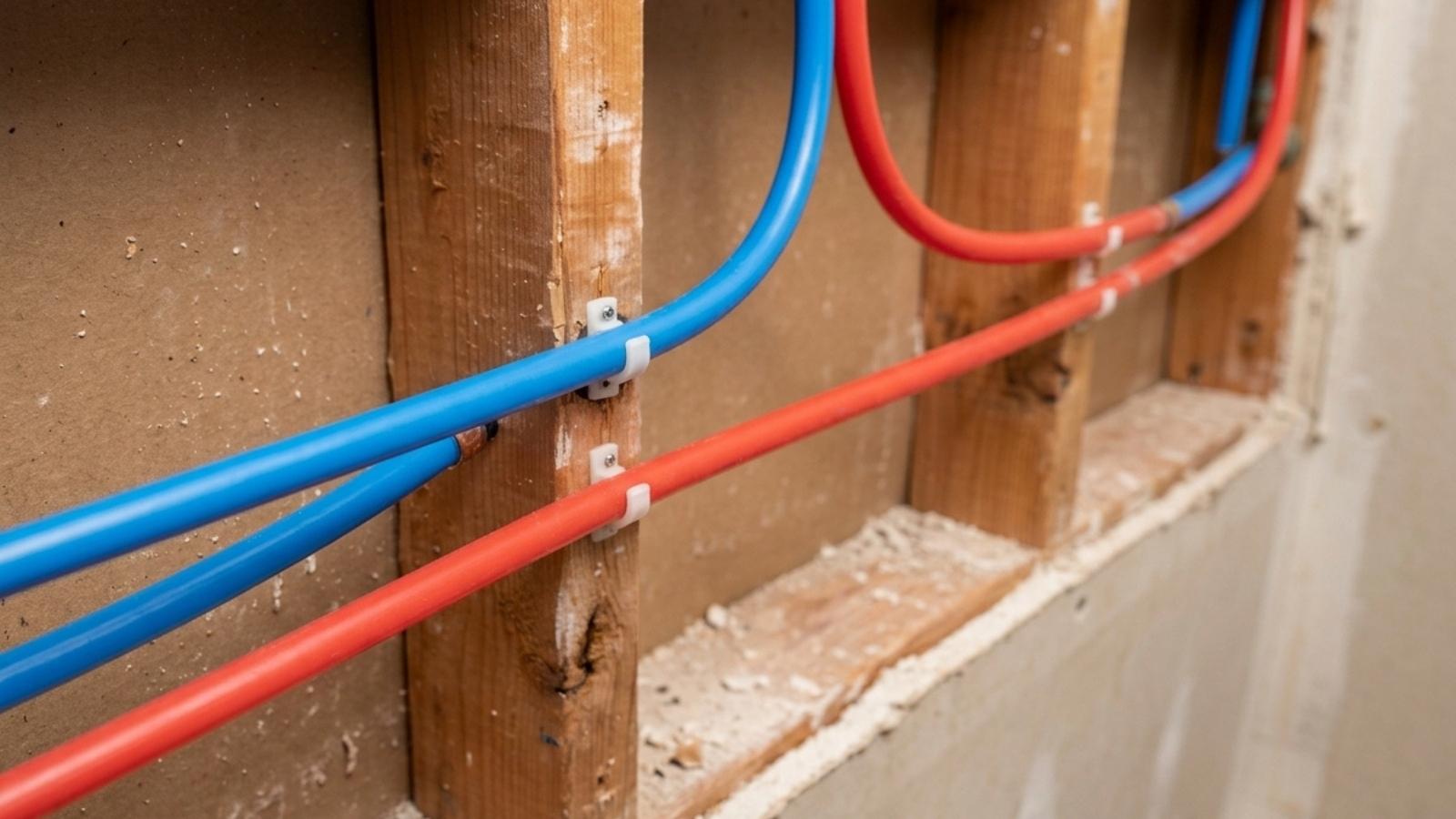
So what’s the payoff for choosing PEX over copper? Real money, both upfront and over the long run.
Compared to a copper repipe on the same home, PEX generally saves you $2,000 to $5,000. A two-bathroom home that runs $8,000 to $10,000 in copper often lands at $4,000 to $6,000 in PEX.
But the savings don’t stop at install:
- Fewer leaks: PEX resists corrosion and the pinhole leaks that plague aging copper
- Lower energy use: PEX loses less heat, keeping hot water hotter and using less energy
- Better water quality: No corrosion means no metal leaching into your drinking water
- Fewer repairs: Highly durable and highly resistant to acidic water, PEX cuts future repair bills
Copper still has its strengths, and it’s a highly reliable material that can last over 50 years. If you want the full side-by-side, our guide on PEX vs. copper for Orange County homes breaks down every trade-off.
Is the Switch Worth It?
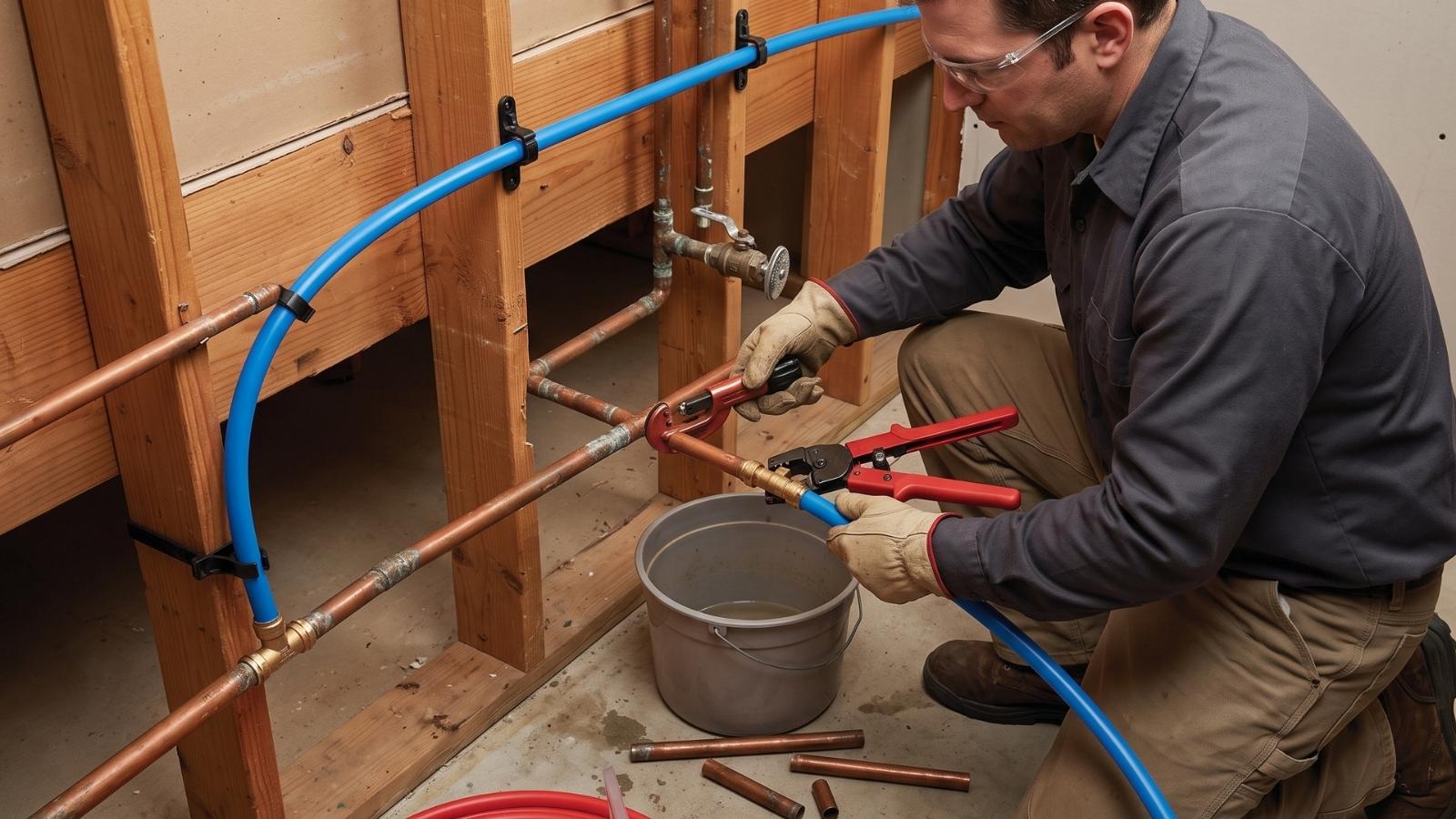
For most homeowners with failing pipes, yes. If your copper is developing frequent pinhole leaks, throwing good money at repeated repairs on old pipes rarely pays off.
The switch makes the most sense when:
- Your copper or cast iron lines are corroding and leaking
- You’re tired of patching the same failing pipes
- You want lower upfront cost and lower long-run maintenance
- Your water is acidic and chewing through copper early
One honest caveat: PEX isn’t for every spot. It degrades under UV light, so it’s not suited for exposed outdoor runs where copper still wins. A good repipe specialist will flag those cases instead of forcing one material everywhere.
That’s the assessment we bring to every job. We look at your pipes, your water, and your layout, then tell you straight whether a full PEX swap is your best move.
Replace Copper With Confidence at OC Repipes
Swapping copper for PEX is one of the smartest plumbing upgrades you can make, and now you know what it really costs. A few thousand dollars once beats bleeding cash on pinhole-leak repairs forever.
Quick recap:
- Total cost: Roughly $4,000 to $15,000, most homes in the middle
- Material: PEX runs $0.50 to $2 per linear foot vs. copper’s $2 to $4
- Savings: Expect $2,000 to $5,000 less than copper
- Extras: Budget for permits and drywall repair
- Worth it: Usually yes, especially for corroding, leak-prone copper
Since PEX repiping is core to what we do, OC Repipes delivers the swap clean, fast, and flat-rate, backed by a Lifetime Warranty on workmanship. We handle the old pipe removal, the new install, the drywall, and the cleanup. You just enjoy leak-free water.
Frequently Asked Questions
Is it worth it to replace copper pipes with PEX?
Usually yes, especially if your copper has frequent pinhole leaks. PEX costs less, resists corrosion, and ends the repeat-repair cycle. Corroding copper rarely pays to keep patching.
How much does it cost to switch from copper to PEX?
Replacing copper with PEX typically costs $4,000 to $15,000, with most homes averaging $3,500 to $11,000. PEX materials run $0.50 to $2 per linear foot.
What is the downside to PEX plumbing?
PEX degrades under UV light, so it can’t be used for exposed outdoor runs. It also has a shorter track record than copper, though it resists corrosion better.
Is it cheaper to run copper or PEX?
PEX is cheaper on both counts. Material runs $0.50 to $2 per linear foot versus copper’s $2 to $4, and faster installation means lower labor costs too.
