
Somewhere behind your drywall sits a network of pipes you’ve never seen. Replacing all of it sounds like tearing your house apart. It isn’t, but it does require careful planning and a process most homeowners have never watched up close.
Here’s the whole job, start to finish, so you know exactly what happens between “we’re repiping” and “water’s back on.”
What we’ll cover:
- The full repiping process, step by step
- Pipe materials and which to pick
- Timeline and cost for a typical house
- Whether DIY repiping is realistic
- What older homes throw at you mid-project
Repiping is the only thing we do at OC Repipes, so this is the version from inside the walls.
TL;DR: The Repipe at a Glance
| Stage | What Happens | Time |
|---|---|---|
| Inspection | Plumber maps existing pipes and new routes | Before job |
| Permits | Contractor pulls local plumbing permits | 1 to 3 days |
| Prep | Drop cloths, furniture covered, dust containment | Hours |
| Access | Small holes cut in walls and ceilings | Day 1 |
| Shutoff | Main water line closed, old pipes disconnected | Day 1 |
| Installation | New pipes run to every fixture | 1 to 3 days |
| Pressure testing | System tested for leaks before walls close | Day 2 to 4 |
| Inspection | County inspector verifies code compliance | Day 3 to 5 |
| Restoration | Drywall patched, site cleaned | 1 day+ |
What a Whole House Repipe Includes
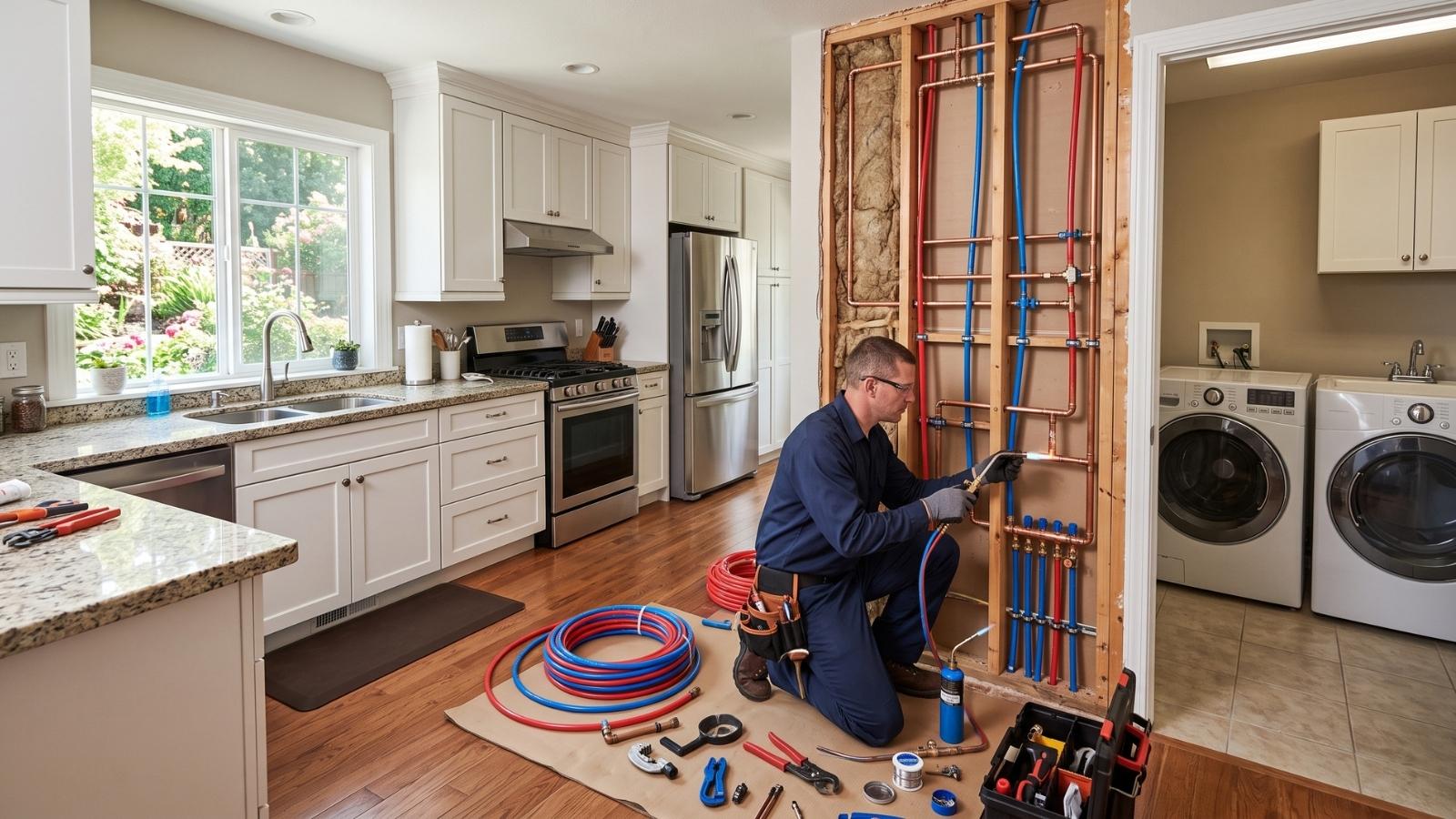
First, scope. A whole house repipe replaces all the hot and cold water supply lines running from your main water line to every fixture, from the kitchen sink to the second floor bathroom to the hose bib outside.
What’s usually not included:
- Your sewer or septic system, unless specified separately
- Drain lines, which are a different job
- Existing fixtures, though shower valves sometimes need replacing
- Lead service lines, which stay untouched unless you upgrade them deliberately
Worth confirming on that last point. If your home has a lead water line from the street, ask directly whether it’s in scope. Leaving it in place means part of your water system still carries contaminants.
Step 1: Inspection and Planning
Every repipe starts with a licensed plumber walking your house. They evaluate the existing plumbing layout, identify your current piping materials, and determine the route the new pipes will take.
What gets decided here:
- How many access holes are needed and where
- New pipe routing through walls, attic, or crawl space
- Which fixtures need temporary removal
- Permit requirements and application timing
- Material choice for the whole job
Homes over 50 years old get extra attention. Galvanized pipes, mineral buildup, and odd historical routing all change the plan.
Step 2: Permits and Prep
Local plumbing permits are commonly required for whole house repiping, and your contractor should pull them. Skipping permits creates real resale and legal exposure later.
Then comes protection. Before anyone cuts drywall, a good crew lays drop cloths, covers furniture near work areas, and sets up dust containment with plastic sheeting to isolate the plumbing work from the rest of your home.
Pro tip: Clear access yourself before day one. Empty the cabinet under the kitchen sink, move items away from the water heater and laundry room, and open up the access panel to any crawl space. Every minute crews spend moving your things is a minute you pay for.
Step 3: Shutoff and Access
The main water supply gets shut off, and the crew opens small access holes in walls and ceilings to reach the old pipes.
Placement matters enormously here. Experienced plumbers cut the minimum number of openings in the least disruptive spots, which directly affects your drywall repair bill.
Old pipes are then disconnected. In most modern repiping work, the old galvanized steel or copper pipes stay in the walls rather than getting ripped out, which spares you significant demolition.
Step 4: Installing the New Pipes
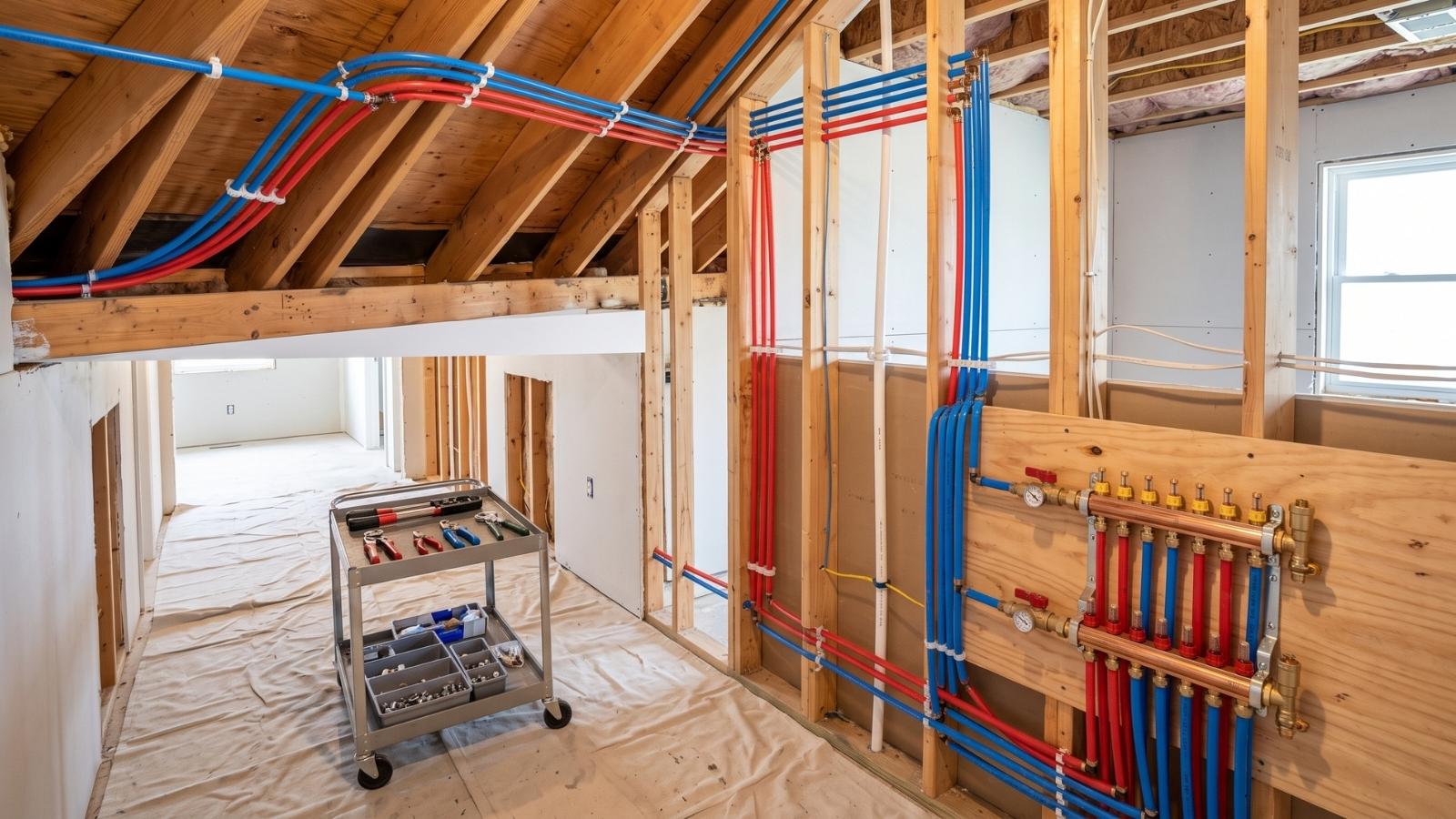
Now the actual replacing pipes part. New lines get routed through walls, ceilings, or the crawl space and connected to every existing fixture.
For a PEX repipe, installation uses expansion fittings or crimp rings depending on the system. PEX-A uses expansion tools that widen the pipe end before it shrinks back around the fitting, creating a connection stronger than the pipe itself. Copper requires soldering at every joint, which is slower and demands more skill.
PEX’s flexibility earns its keep here. It snakes through tight spaces and around corners where rigid copper would need multiple fittings and more wall damage.
Step 5: Pressure Testing and Inspection
Before a single wall closes, the new piping system gets pressure tested. This confirms there are no leaks anywhere in the system, which is far easier to fix now than after drywall goes back up.
Then the county inspector verifies the plumbing work complies with local codes. That sign-off protects you at resale and confirms the installation was done properly.
Never skip this: Pressure testing before closing walls is non-negotiable. A contractor who wants to patch first and test later is telling you something about their confidence.
Step 6: Drywall and Cleanup
The final stage. Access holes get patched, textured, and painted, and the site gets cleaned.
Confirm who handles this before signing anything. Drywall and surface damage is the most common concern homeowners raise, and it’s also the line item most frequently excluded from a base quote. Patching typically adds $300 to $1,500 or more depending on how many openings your home needed.
At OC Repipes, drywall repair, repainting, and full cleanup are bundled into one flat rate, so there’s no scrambling for a second contractor after the plumbers leave.
Choosing Your Pipe Material
Material choice heavily influences both budget and longevity. Here’s the honest comparison.
| Material | Strengths | Drawbacks |
|---|---|---|
| PEX | Flexible, freeze-tolerant, fast install, cost effective | UV-sensitive, shorter track record |
| Copper | Lasts 50+ years, naturally antimicrobial, durable | Expensive, requires soldering |
| CPVC | Handles high temperatures, resists corrosion | Becomes brittle with age, rarely recommended now |
| PVC | Cost-effective for cold water systems | Not rated for hot water |
Most repipes today use cross linked polyethylene. PEX-A and PEX-B are the common grades, with PEX-A offering the most flexibility and the best freeze tolerance. PEX pipes tolerate freezing far better than rigid pipes because they expand instead of splitting.
Copper still wins on longevity and antimicrobial properties, and copper pipes can last over 50 years with proper installation. Our PEX vs. copper breakdown covers which fits Southern California conditions.
Timeline and Cost
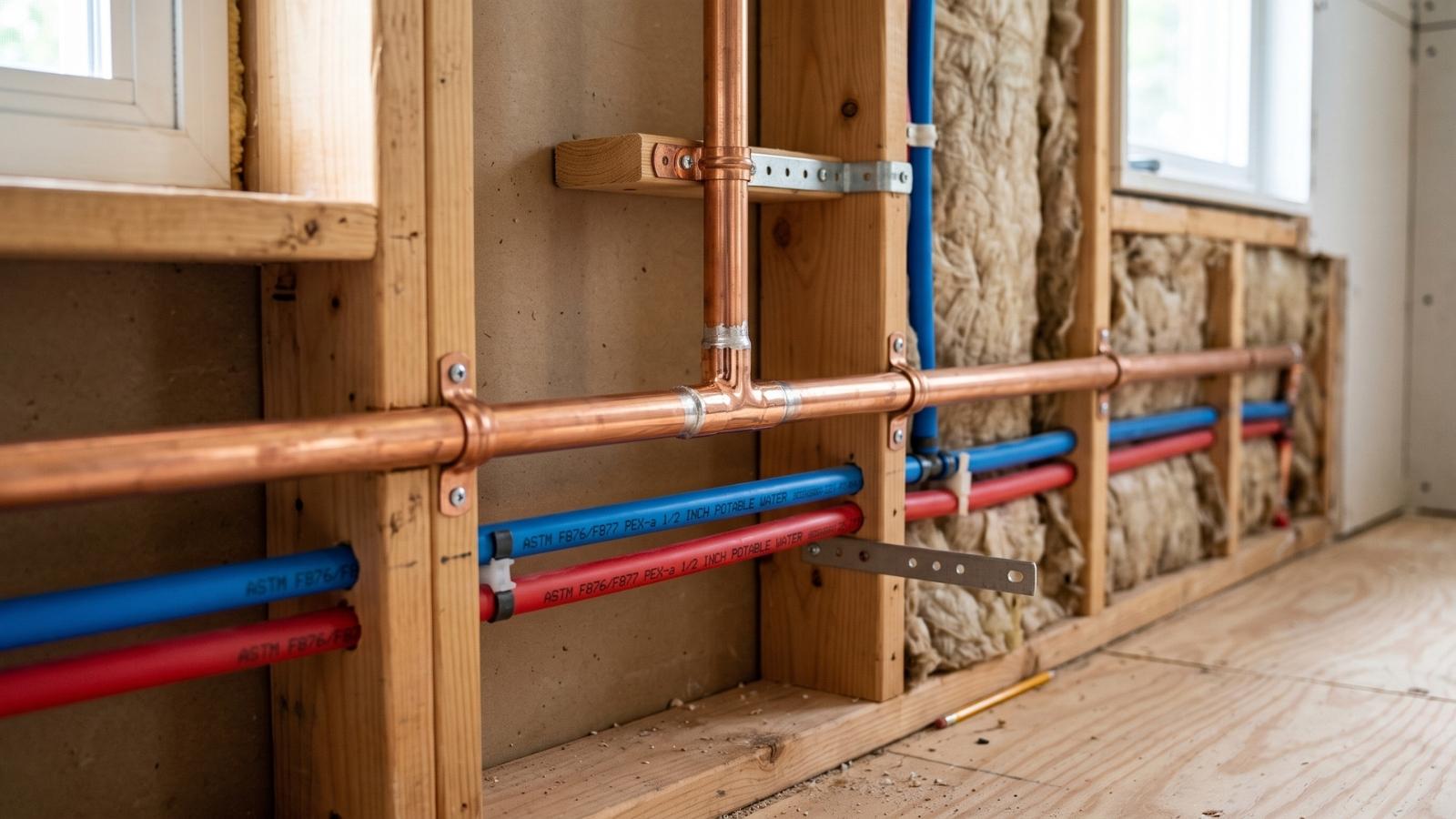
Timeline: Repiping a house typically takes 2 to 5 days, depending on home size, fixture count, and complexity. Drywall repair adds time on top.
Cost: Professional house repiping runs $1,500 to $15,000, with most homeowners landing around $7,500. Copper piping costs considerably more than PEX or PVC.
What drives your number:
- Home size and total square footage
- Fixture count, with each additional bathroom adding labor
- Foundation type, since slab homes need overhead rerouting
- Pipe accessibility, with an unfinished basement being far cheaper than finished walls
- Material choice
The good news for your daily routine: the main water supply is shut off only during working hours and restored each evening, so most families stay home throughout.
Can You Repipe Your Own House?
The honest answer: technically possible, practically inadvisable for most people.
DIY repiping saves on labor, which is roughly 70% of a professional bill. But the savings assume everything goes right, and repiping work rarely does.
What you’re taking on:
- Specialized tools like PEX expansion tools and crimp tools
- Permit applications and passing a county inspection yourself
- Code knowledge for every connection and routing decision
- Unexpected challenges an older house reveals mid-project
- Full liability if a connection fails inside a wall two years later
Older homes are where DIY projects stall. Confined spaces, structural obstacles, unexpected pipe routing, and access challenges surface once walls open. Experienced plumbers have seen those situations before and adapt fast.
A plumbing contractor’s experience directly shapes installation quality. Consulting professionals helps you avoid costly repairs that erase whatever you saved on labor.
Repipe Your House the Right Way With OC Repipes
Repiping a house follows a clear sequence: inspect, permit, prep, access, install, test, inspect, restore. Done by people who do it daily, the whole job wraps in days with minimal disruption.
Quick recap:
- Process: 8 stages from inspection through drywall restoration
- Timeline: 2 to 5 days for most homes
- Cost: $1,500 to $15,000, averaging near $7,500
- Materials: PEX for most homes, copper for longevity
- Testing: Pressure test before walls close, always
- DIY: Possible, rarely worth the risk
Since repiping is all we do, OC Repipes handles every stage under one flat rate: permits, installation, pressure testing, inspection, drywall repair, and cleanup, backed by a Lifetime Warranty on workmanship. Get a free estimate and see the whole scope in writing.
Frequently Asked Questions
What is the average cost to repipe a home?
Repiping a house costs $1,500 to $15,000, with most homeowners paying around $7,500. PEX runs cheapest, while copper piping costs significantly more.
How difficult is it to repipe a house?
Difficult for a DIYer. It requires specialized expansion tools, code knowledge, permits, and a county inspection, and older homes often reveal access challenges mid-project.
Will insurance pay to repipe a house?
Usually no. Standard policies cover sudden damage like a burst pipe but treat corrosion and aging pipes as maintenance, leaving the repipe cost to you.
How much does it cost to repipe a house that is on a slab?
Expect 25 to 50% more than a crawl space home. Pipes under concrete can’t be accessed easily, so plumbers reroute lines overhead, requiring more drywall cuts.
Does repiping include drain or sewer lines?
No. A whole house repipe replaces water supply lines only. Your sewer or septic system and drain lines are separate jobs unless specified in the contract.
Do I need a permit to repipe my house?
Yes, local plumbing permits are commonly required. Your contractor should pull them and schedule the county inspector, and skipping them creates resale problems later.
