
That small leak under the sink isn’t always a small problem. Sometimes it’s the first whisper of a plumbing system quietly failing behind your walls, and the difference between a cheap fix now and a flooded living room later comes down to reading the signs early.
Old pipes rarely fail all at once. They warn you first. This guide shows you exactly what to watch for.
Here’s what we’ll cover:
- The key signs your plumbing is wearing out, not just acting up
- Why a single leak differs from a failing system
- How aging pipes and old materials raise your risk
- What the repiping process actually involves
- When to call a pro before disaster strikes
We repipe homes for a living at OC Repipes, so we know the tells. Catch them early, and you stay in control.
One Leak or a Failing System?
First, a distinction that matters more than any single symptom. One leak on otherwise sound pipes is a repair. A pattern of leaks, discoloration, and pressure problems is a system telling you it’s done.
The reason this distinction matters: patching a single leak on aging, corroding pipes just means the next leak is already on its way somewhere else. Almost any leak can be fixed. The real question is whether the pipes themselves have reached the end.
Pro tip: One leak in ten years is bad luck. Three leaks in two years is a pattern. Once you’re calling a plumber on repeat, you’ve usually crossed from “fix it” to “replace it.”
The warning signs below point to that whole-system failure. If two or more show up together, it’s time to get your plumbing system inspected.
Recurring Leaks Everywhere
The clearest signal of all. When your home springs new leaks in different spots, it’s no longer a coincidence. It’s aging pipes failing throughout the system.
Frequent leaks mean the pipes will keep breaking as long as they sit in the walls. Each patch buys weeks, not years. And every hidden leak you can’t see is quietly feeding water damage inside your walls.
Watch for these leak-related red flags:
- Water stains on ceilings, walls, or under sinks
- A sudden jump in your water bill with no change in usage
- Damp spots, mold, or a musty smell near exposed pipes
- Repeated repairs on the same or nearby lines
A single leak is a repair call. Recurring leaks across your home’s plumbing system are a repiping conversation.
Discolored or Rusty Water
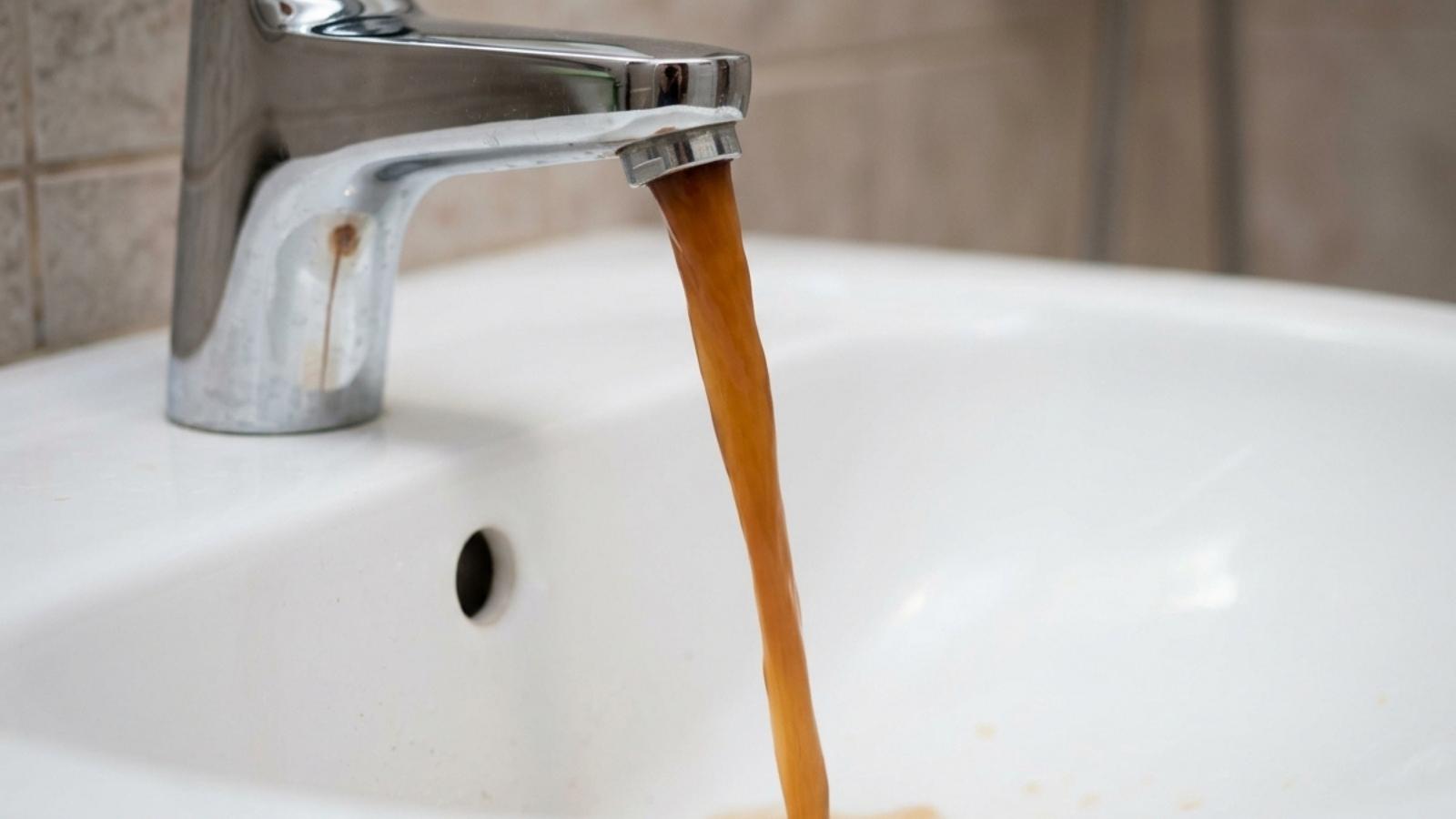
Turn on the tap and see brown, yellow, or rusty water? That’s active corrosion inside your pipes. As older pipes break down, they shed rust and sediment straight into your water supply.
Galvanized steel is the usual culprit. It corrodes from the inside out, which is why homes with original plumbing from before the 1970s so often run discolored water. The rust you see in the glass is the pipe dissolving into your drinking water.
| What You See | What It Likely Means |
|---|---|
| Rusty or brown water | Active internal pipe corrosion |
| Metallic taste or odor | Metals leaching from degrading pipes |
| Cloudy water with sediment | Restricted, scaling pipes shedding buildup |
| Discoloration after sitting | Aging pipes releasing material into supply |
Strange tastes or smells belong in the same bucket. Both point to metals leaching from deteriorating plumbing materials, and both hurt your water quality until you replace the pipes.
Low Water Pressure Throughout
Weak showers and trickling faucets aren’t always a clog. When low water pressure shows up across multiple fixtures at once, the cause is often corrosion and mineral buildup narrowing the pipes from the inside.
As restricted pipes close up internally, water flow drops and pressure fades. A repipe with new pipes restores full flow, because you’re swapping choked lines for clean, open ones.
One caveat worth knowing: low pressure at a single faucet is usually a fixture or aerator issue, not a system one. It’s the widespread drop, hitting your sinks, shower, and washing machines together, that signals internal pipe corrosion.
Visible Corrosion on Pipes
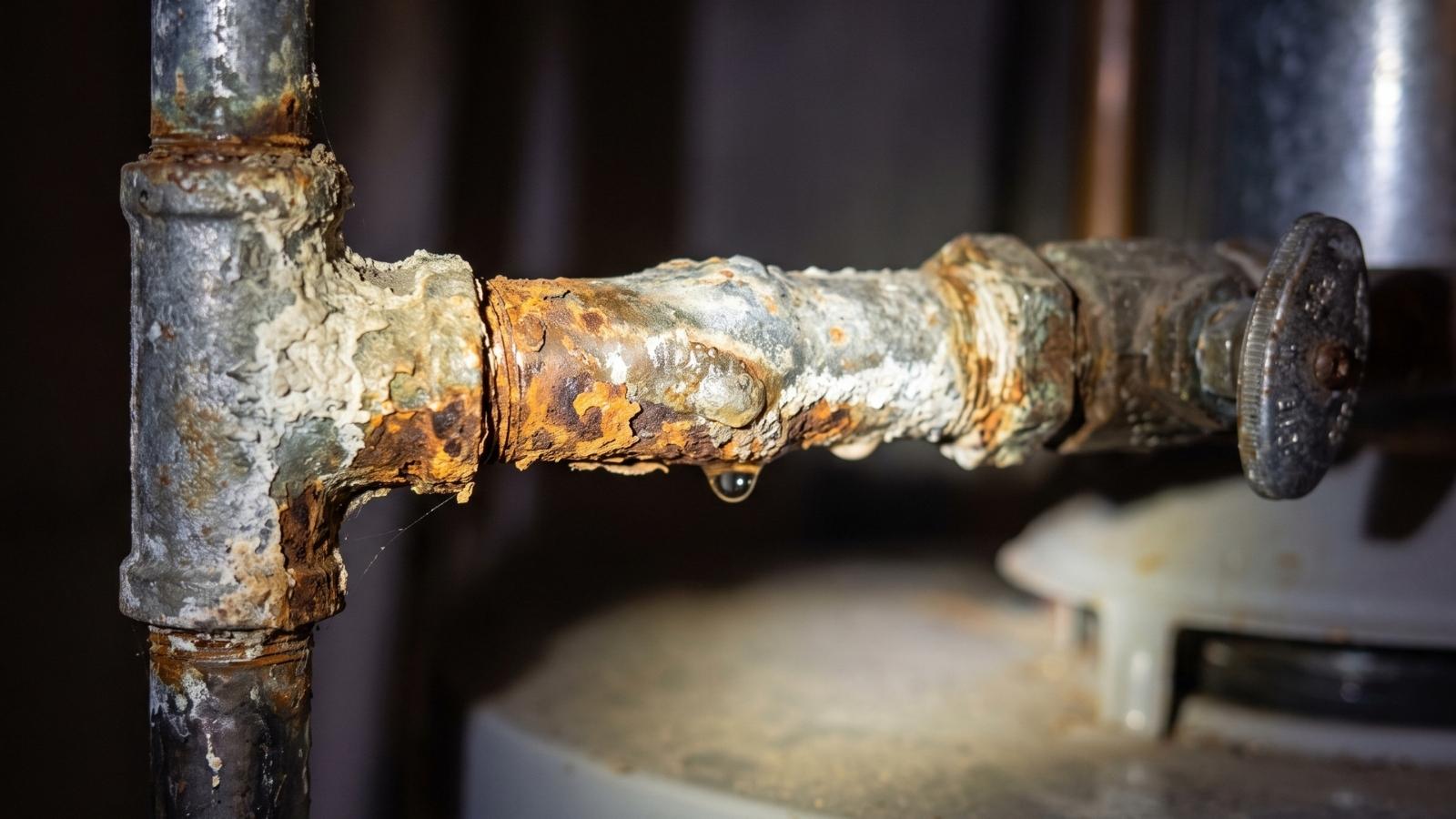
Sometimes the pipes tell you outright. Head to your basement, garage, or utility closet and look at any exposed pipes.
Signs of advanced deterioration include:
- Green or blue stains on copper
- White, flaking “pimples” on galvanized steel
- Rust, dimpling, or discoloration along the pipe body
- Flaking or bubbling around fittings and joints
What shows on the outside usually reflects worse conditions inside. Visible corrosion means the pipe is well down the road toward failure, and it deserves a professional’s eyes soon.
Your Home’s Age and Pipe Material
The material in your walls tells you a lot before any symptom appears. Homes built before 1970 often carry outdated plumbing materials that are simply past their prime.
Here’s the rough lifespan of common piping materials:
| Material | Typical Lifespan | Risk Note |
|---|---|---|
| Galvanized steel | 20 to 50 years | Corrodes from the inside out |
| Polybutylene | 10 to 25 years | Known to be failure-prone |
| Copper | 50 to 100+ years | Durable, long-lasting |
| PEX (cross-linked polyethylene) | 40 to 50 years | Flexible, resists scale and freeze |
If your average sized home still runs on its original pipes and they’re galvanized or polybutylene, you’re a strong repiping candidate regardless of how many leaks you’ve had yet. Modern materials like copper and PEX dramatically cut future plumbing issues, which is exactly why most homeowners upgrade.
Not sure what’s behind your walls? A quick look from a professional repiping team settles it fast.
Why Waiting Costs You More
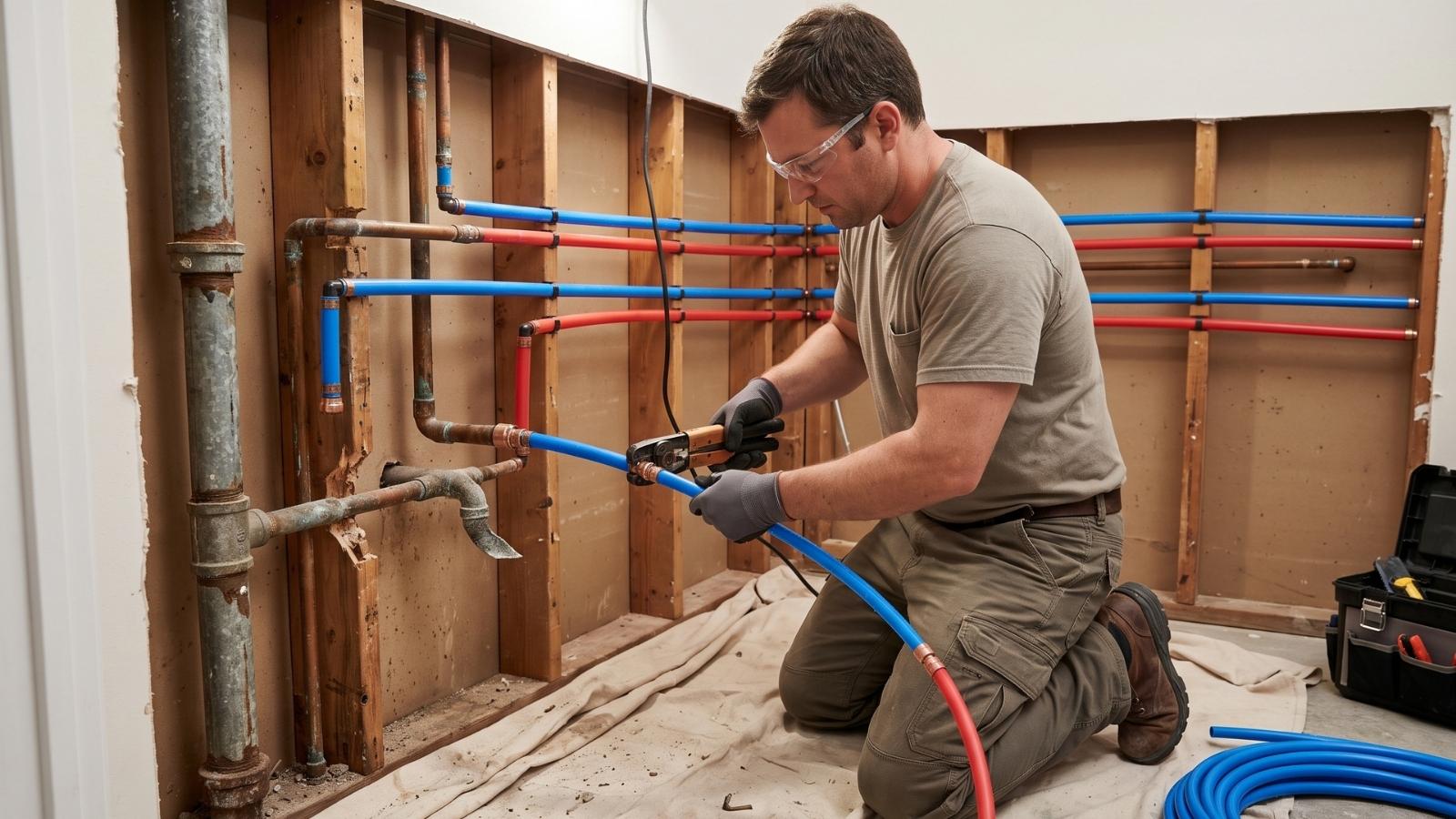
Aging infrastructure doesn’t just leak. It fails, and a burst pipe on a Saturday night is the kind of plumbing emergency that soaks floors, ruins drywall, and breeds mold.
The math is simple. A planned repipe is predictable. A pipe bursts on its own schedule, not yours, and the water damage cleanup often dwarfs the repipe itself.
The bottom line: A full repipe can prevent thousands in future water damage costs. You’re not just buying pipes. You’re buying peace of mind against the 2 a.m. flood.
Repiping also pays you back. New pipes can add real value to your home, eliminate rusty water, restore proper pressure, and hand buyers one less thing to worry about at inspection.
What the Repiping Process Involves
Worried about the disruption? Understandable. But modern home repiping is faster and cleaner than most people expect.
Here’s how it generally goes:
- Assessment: a plumber inspects your system and maps the job
- Installation: crews run new pipes, often alongside the old ones for easier access
- Timeline: an average-sized home takes roughly 2 to 5 days
- Restoration: walls get patched and cleaned up afterward
Total cost depends on your home’s size, layout, and how easy the pipes are to reach. Two-story homes and tight wall cavities take more labor. The upside of hiring a dedicated service is a crew that does this daily, works with transparent pricing, and knows how to minimise disruption to your routine.
That’s our whole focus at OC Repipes. Repiping isn’t a side gig here; it’s all we do, which means fewer surprises, cleaner jobs, and pipes built to outlast the ones we pull out.
Repipe Before Disaster Strikes with OC Repipes
Your pipes will tell you when they’re done. The smart move is listening before a small leak becomes a burst pipe and a soaked living room.
Quick recap of the key signs:
- Recurring leaks across different spots in the home
- Rusty or discolored water from multiple faucets
- Low water pressure at several fixtures at once
- Visible corrosion on exposed pipes
- Old materials like galvanized steel or polybutylene
Since repiping is the only thing we do, OC Repipes spots these warning signs fast and fixes them for good. We assess your plumbing, install modern pipes, and back every job with a Lifetime Warranty. No urgent issues left waiting, no disaster on the horizon.
Frequently Asked Questions
How to tell if a house needs replumbing?
Watch for recurring leaks, rusty water, low water pressure across fixtures, and visible corrosion on exposed pipes. Two or more signs mean you should get your plumbing system inspected.
What is the 135 rule for plumbing?
The 135 rule limits a drain line to 135 degrees of total directional change before a vent or cleanout. It prevents clogs, not a repiping guideline, but good to know.
What is the average life expectancy of house plumbing pipes?
It varies by material: galvanized steel lasts 20 to 50 years, polybutylene 10 to 25, copper 50 to 100+, and PEX around 40 to 50 years.
Does repiping increase home value?
Yes. New pipes can add significant value, signaling updated, reliable plumbing to modern buyers and removing a major red flag during home inspections.
How long does a whole-house repipe take?
Most repiping projects take 2 to 5 days for an average-sized home. The timeline depends on house size, layout, and how easy the pipes are to access.
