
You bought a fancy filter, and your water still tastes off. Frustrating, right? Here’s the piece most homeowners miss: the cleanest filter in the world can’t fix water that’s picking up rust on its way through corroding pipes.
Clean water is a two-part job. The pipes that carry it, and the filtration that polishes it. Skip either one, and you’re only halfway there.
Here’s what we’ll cover:
- Why your pipes come first, before any filter
- How whole-house filtration actually works
- The main filter types and what each one removes
- Which system fits your water
- The combo that delivers truly clean water
We handle both repiping and water filtration at OC Repipes, so we see the full picture. Let’s connect the dots.
Why Repiping Comes First
Your water filtration system is the last stop before the glass. But if your water flows through old, corroding pipes after filtration, or picks up contaminants along the way, you’ve undone the work.
Aging pipes leach trouble into your water supply. Galvanized steel and old copper corrode from the inside, shedding rust, sediment, and even heavy metals into your drinking water. That’s a real health risk, not just a taste problem.
Signs your pipes are polluting your water:
- Rusty or discolored water from the tap
- A metallic taste that no filter seems to fix
- Sediment settling at the bottom of a glass
- Pressure drops from mineral buildup inside the pipes
Repiping solves this at the source. New pipes give filtered water a clean pathway to your faucet, with no corrosion to leach metals back in. They also enhance water flow and pressure, so your whole system runs better.
The core idea: Filtration cleans the water. Repiping keeps it clean on the way to you. Combine both, and you get a comprehensive solution instead of a half-fix.
How Whole-House Filtration Works
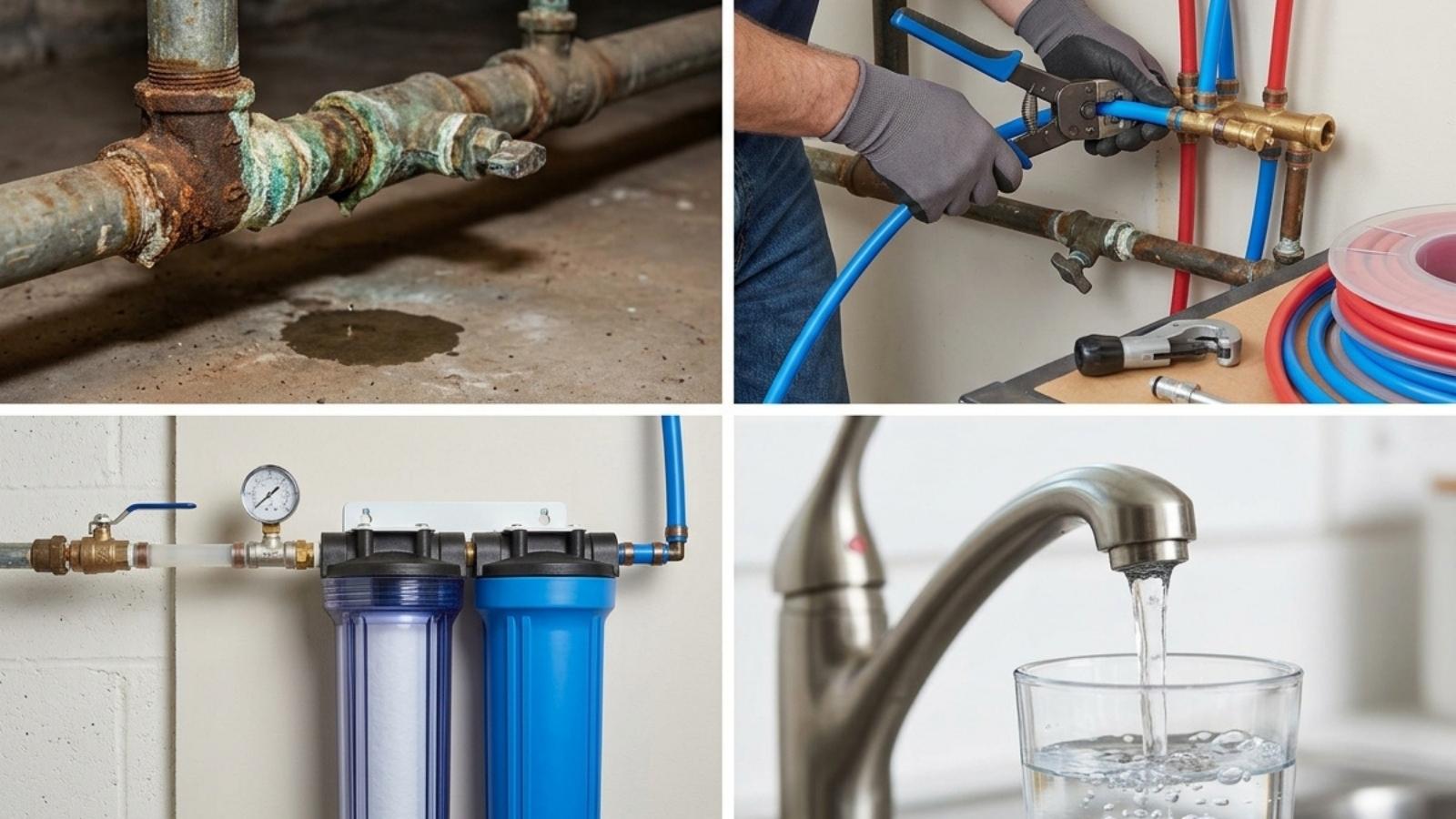
Once your plumbing is sound, filtration does the polishing. A whole house water filtration system treats all the water entering your home at the main water line, not just one faucet.
That means every tap, shower, and appliance gets high quality water. Your kitchen sink for drinking and cooking water, your shower for bathing, and your washing machines and water heaters for daily use.
The benefits stack up fast:
- Better taste and odor: Removing chlorine and other compounds cleans up how your tap water tastes
- Healthier skin and hair: Less chlorine means less dryness and irritation
- Appliance protection: Filtered water prevents scale that wears out dishwashers and water heaters early
- Less bottled water: Clean water on tap cuts the need to buy bottles, which saves money and energy
A whole house filtration system acts as your first line of defense. It’s the gold standard for treating your home’s water everywhere it flows.
The Main Filter Types Explained
Not all filters do the same job. The right one depends on what’s actually in your water. Here’s how the main types stack up.
| Filter Type | What It Removes | Best For |
|---|---|---|
| Sediment filters | Sand, rust, larger particles | Visible grit and cloudy water |
| Activated carbon filters | Chlorine, VOCs, odor | Taste and smell issues |
| Reverse osmosis | Up to 99% of impurities | Lead, arsenic, dissolved contaminants |
| Water softeners | Hard water minerals | Scale and soap scum |
| UV filters | Bacteria and viruses | Well water disinfection |
A closer look at the heavy hitters:
- Activated carbon: The workhorse. Whole-house carbon filters remove up to 97% of chlorine and improve both the taste and safety of your water. As water passes through the carbon, it grabs chemicals and odors.
- Reverse osmosis systems: The deep-clean option. Reverse osmosis filters push water through a semi-permeable membrane to remove up to 99% of impurities, including heavy metals like lead and arsenic, plus pesticides and dissolved contaminants.
- Water softeners: These use ion exchange to strip out hard water minerals that cause buildup and soap scum, protecting your plumbing fixtures and appliances.
- UV filters: These kill bacteria and viruses with ultraviolet light, a smart add-on for a private well.
Many strong setups layer these. Pre-filters (sediment and carbon) protect a reverse osmosis membrane downstream, so each stage handles what it does best. Point-of-use filters at the kitchen sink can polish drinking water further.
Which System Fits Your Water?
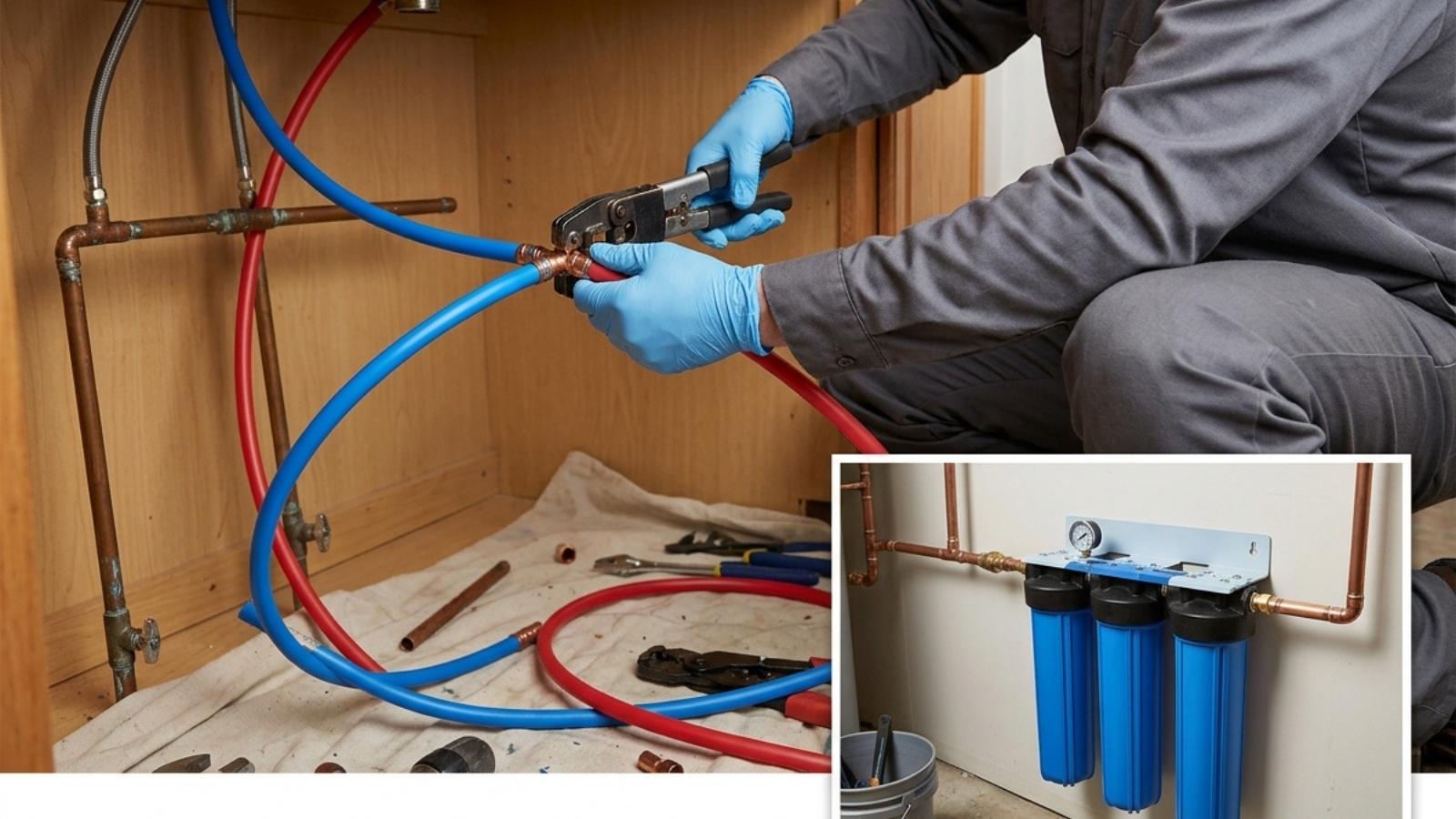
The best water filtration system is the one that matches your water, not the priciest unit on the shelf.
A quick water test tells you exactly what you’re dealing with, so you target the real contaminants present instead of guessing:
- City water usually needs chlorine, sediment, and taste treatment. Carbon often does the job.
- Well water frequently needs UV or RO to handle bacteria and minerals.
- Hard water calls for a softener to stop scale.
- Lead or heavy metals require reverse osmosis, full stop.
One honest caveat on reverse osmosis: it’s thorough but wastes water, using up to 5 gallons to produce a single filtered gallon in some systems. Whole-house RO systems can treat up to 600 gallons a day, so sizing matters.
Ballpark costs, so you can plan:
- Carbon-only whole house filters: roughly $500 to $1,500
- Multi-stage systems: around $1,000 to $3,000
- Whole-house reverse osmosis: $3,000 to $8,000+
Not sure where to start? A water quality test settles it with data, and it’s the smartest first move before spending a dime on equipment.
Filter Maintenance Matters
A filter you never service is a filter that quietly stops working. Regular upkeep keeps your water clean and extends the life of the system.
Rough replacement schedule to keep in mind:
- Sediment filters: every 6 to 12 months
- Activated carbon filters: every few months to annually
- Reverse osmosis membranes: every 2 to 5 years, depending on usage
Stay on top of these, and your filtration keeps delivering clean and safe water for years. Let them clog, and both taste and flow suffer.
The Combo That Delivers Clean Water
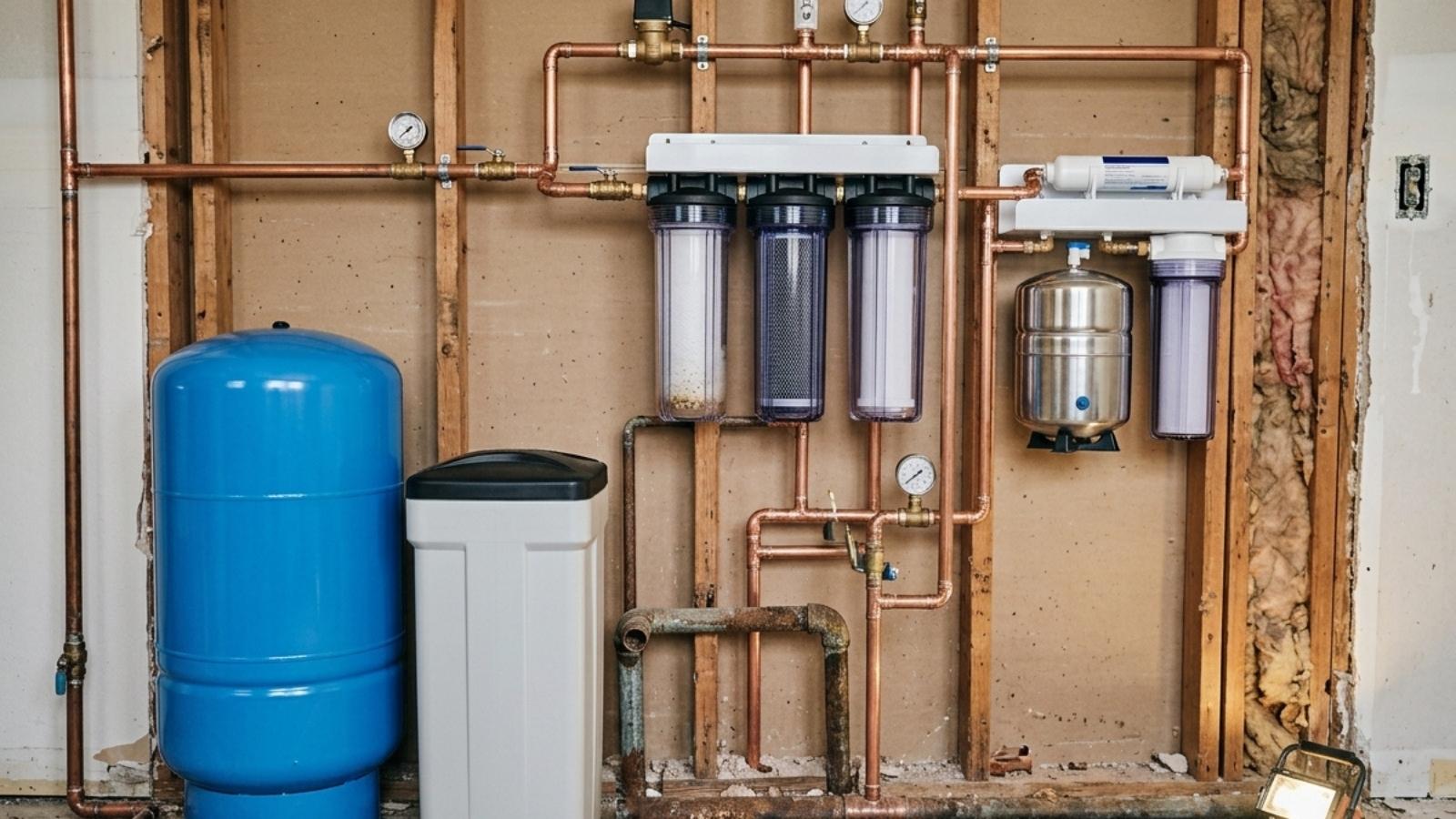
Repiping and filtration aren’t competing choices. They’re partners.
New pipes eliminate the corrosion and heavy metal leaching that pollute water from within. Filtration removes the chlorine, sediment, and dissolved contaminants that come in from the source. Together, they protect your family’s health from both directions.
The payoff of doing both:
- Truly clean water at every tap, not just one
- Protected appliances and a longer-lasting plumbing system
- Better pressure and flow from fresh pipes
- Real savings on repairs and bottled water over time
That’s exactly the combined solution we build. A repipe paired with whole-house filtration gives you a clean pathway and clean water, handled by one team that understands how both pieces fit. For drinking water specifically, a reverse osmosis system at the kitchen sink adds the final polish.
Cleaner Water Made Simple With OC Repipes
Clean, safe water isn’t one product. It’s a system. Sound pipes to carry it, smart filtration to purify it, and a team that knows how to pair them.
Quick recap:
- Repipe first: New pipes stop corrosion from tainting your water
- Filter smart: Match the system to a real water test
- Carbon removes chlorine, RO removes heavy metals, softeners tackle hardness
- Maintain it: Swap filters on schedule for lasting results
- Combine both: The pipes plus filter combo is the real fix
Since we handle repiping and filtration under one roof, OC Repipes makes cleaner water simple. We assess your pipes, test your water, and build the right combination for your home, backed by a Lifetime Warranty on workmanship. One team, clean water, done right.
Frequently Asked Questions
What is the cheapest safest method of purification of water?
Activated carbon filters are the cheapest effective option, removing chlorine and improving taste. For broader safety against heavy metals, reverse osmosis costs more but removes up to 99% of impurities.
What is the safest water filtration system?
Reverse osmosis is the gold standard, removing up to 99% of impurities including lead, arsenic, and pesticides. Pairing it with UV filtration adds protection against bacteria and viruses.
What are the 7 stages of purification of water?
A multi-stage system typically layers sediment pre-filters, activated carbon, a carbon block, a semi-permeable RO membrane, a post-carbon filter, UV disinfection, and a remineralization stage.
What is the average cost of a whole home water filtration system?
A whole-house filtration system runs $500 to $5,400 installed. Basic carbon runs $500 to $1,500, multi-stage $1,000 to $3,000, and whole-house reverse osmosis $3,000 to $8,000+.
